How the Mongols Actually Wired Modern Asia
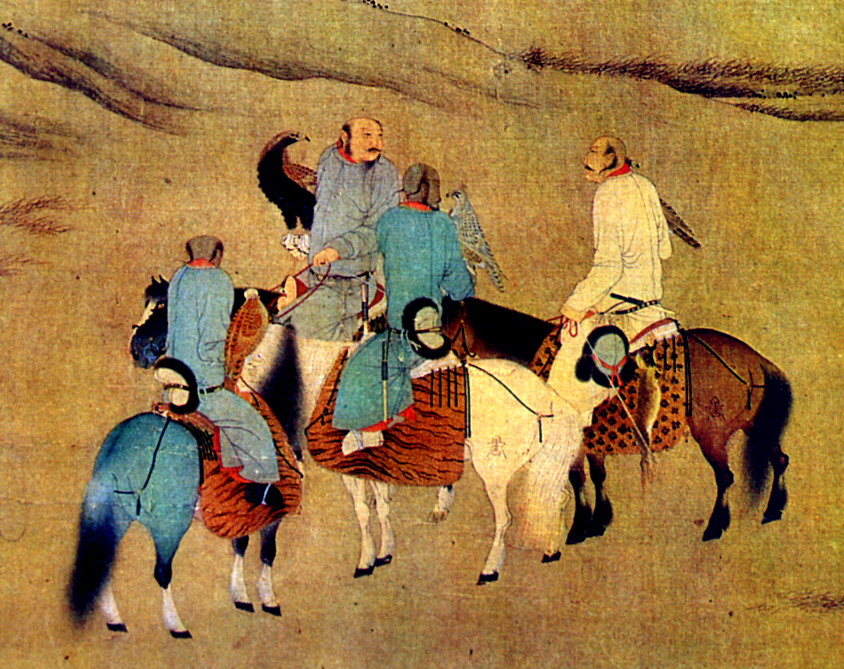
The Mongols fundamentally reshaped modern Asia by creating the largest contiguous land empire, forging unprecedented trade and cultural exchange across vast distances. Their legacy includes influencing political structures, accelerating technological transfer, and leaving an indelible mark on national identities, particularly evident in Mongolia's **71 million** livestock heads (FAO, 2023) and strong connection to its nomadic past.
📊 The Numbers Game: Mongolia Today
Forget the dusty history books for a sec. Let's talk about Mongolia now. This landlocked nation, the spiritual home of Genghis Khan, is far from a relic. Modern Mongolia is a fascinating blend of ancient traditions and rapid change. Economically, it’s still finding its footing with a GDP per capita of only 5,460 USD in 2023 (World Bank, 2023). However, its people are tough and industrious, clocking in an average of 2,200 working hours per year (ILO, 2022) – well above the global average. Life expectancy sits at a respectable 71.5 years (World Bank, 2023), showing improvements in quality of life.
But here’s where it gets interesting: Despite a rapid urbanization rate of 69% (World Bank, 2023), the heart of Mongolia still beats with the rhythm of the steppe. The country boasts an astonishing 71 million heads of livestock (FAO, 2023), outnumbering its human population by more than 20 to 1! This isn't just a statistic; it's a living testament to a nomadic heritage that has shaped its very DNA.
Culturally, according to Hofstede Insights, Mongolia exhibits a high Power Distance (PDI 80) and a strong Long-Term Orientation (LTO 81). This suggests a society that respects hierarchy and plans for the future, perhaps a carryover from the strategic, long-view thinking required to manage an empire or, indeed, a vast nomadic economy. Their low Individualism (IDV 20) also points to a highly collective society, where group cohesion often triumphs individual desires – a trait essential for survival on the harsh steppes and for maintaining a 'Warrior Culture' (Behavior Info) identity.
| Metric | Value | Source |
|---|---|---|
| GDP per Capita | 5,460 USD | World Bank |
| Working Hours/Year | 2,200 | ILO |
| Life Expectancy | 71.5 years | World Bank |
| Urbanization Rate | 69% | World Bank |
| Livestock Count | 71,000,000 heads | FAO |
⚔️ From Steppe to Superpower: The OG Globalizers
Before the internet, before the Silk Road was a mere tourist brochure, there were the Mongols. Often painted as simple barbarians, Genghis Khan and his successors were, in fact, the original architects of a truly globalized world. Their conquests in the 13th century didn't just smash empires; they inadvertently connected them. From Eastern Europe to Southeast Asia, the Mongol Empire facilitated an unprecedented flow of goods, ideas, technologies, and even diseases (oops!).
Think of it: the Pax Mongolica, a period of relative peace imposed across their vast domain, secured trade routes like never before. Marco Polo famously traversed these routes, bringing tales of the East to a bewildered Europe. Gunpowder, printing, paper money, and even pasta (yes, some theories link it back to China via Mongol routes!) flowed westward. Agricultural techniques, astronomical knowledge, and medical practices traveled eastward. The Mongols, in their relentless pursuit of expansion, became an accidental conduit for cross-cultural fertilization on a scale previously unimaginable. They didn’t just conquer; they connected.
👥 The Echoes of Empire: Culture and Identity
The Mongol legacy isn't just about dusty battlefields; it's etched into the cultural psyche of modern Asia. In Mongolia itself, the 'Warrior Culture' (Behavior Info) isn't some historical footnote; it’s a living, breathing identity. The nation's high Long-Term Orientation (LTO 81, Hofstede Insights) might reflect the enduring patience and strategic planning necessary for both nomadic survival and empire-building. The strong collective identity (IDV 20, Hofstede Insights) further reinforces the idea of a people bound by shared heritage and mutual support, reminiscent of the tightly-knit Mongol hordes.
But the impact stretches far beyond Mongolia's borders. In China, the Yuan Dynasty (founded by Kublai Khan) left a complex legacy, influencing administrative structures and contributing to the diverse cultural tapestry. In Central Asia, the various 'Khanates' that emerged from the empire's dissolution shaped distinct ethnic and national identities. Even in Russia, the 'Tatar Yoke' is debated as having contributed to a strong, centralized state tradition, arguably influencing its high Power Distance (PDI, similar to Mongolia’s PDI 80). The very concept of a vast, multi-ethnic empire, managed through sophisticated logistics and communication networks, arguably laid groundwork for future imperial ambitions and statecraft across the continent.
🤯 Myth Busted: More Than Just Horseback Hordes
Here’s the deal: most people picture the Mongols as nothing but bloodthirsty marauders, pillaging and destroying everything in their path. While the conquests were undeniably brutal (history isn't a tea party), this narrative misses the crucial flip side. The Mongols were not just destroyers; they were also patrons of the arts, facilitators of science, and remarkably tolerant (for their time) of diverse religions.
They actively encouraged trade, established standardized weights and measures, and even issued paper currency. They moved scholars, artisans, and engineers across their empire, leading to a vibrant exchange of knowledge that spurred innovation. Rather than simply leveling cities, they often absorbed local administrators and adapted existing systems, creating a surprisingly sophisticated, albeit decentralized, administration. The idea that they were purely backward barbarians is a simplistic Hollywood trope. They were pragmatic, adaptable, and, in their own fierce way, incredibly sophisticated in their approach to empire-building and governance. They valued meritocracy, promoting individuals based on skill rather than birth, a radical concept for many contemporary societies.
🌐 The Big Picture: Conquerors and Connectors
The Mongol story isn't just about one empire; it’s a masterclass in a recurring cross-cultural pattern: how powerful, often violent, expansionist forces become inadvertent agents of globalization. From Alexander the Great's Hellenistic empire to the Roman Empire, and later the British Empire, the pattern is consistent. Conquest creates vast, interconnected zones. These zones, initially forged in blood and iron, then become conduits for cultural diffusion, technological transfer, and economic integration.
The Mongols amplified this pattern to an unprecedented degree across Eurasia. Their sheer scale and the relative speed of their conquests meant that ideas, diseases, and innovations traveled further and faster than ever before. They illustrate that even seemingly destructive forces can have profound, long-lasting, and surprisingly constructive impacts on the trajectory of human civilization. The 'Warrior Culture' (Behavior Info) that defines their historical identity, in this broader context, isn't just about fighting; it's about the relentless drive to expand, explore, and, by consequence, connect. It's a testament to how even the most aggressive power plays can, paradoxically, lay the groundwork for a more interconnected world.
Frequently Asked Questions
While not known for groundbreaking inventions themselves, the Mongols were incredible facilitators. They rapidly spread existing technologies like gunpowder, printing, paper money, and the compass from East to West, accelerating their adoption and development across Eurasia.
The vast Mongol Empire eventually fractured into several independent khanates due to internal succession disputes, cultural assimilation into conquered territories, and the sheer logistical difficulty of maintaining control over such an enormous and diverse realm.
While 69% of Mongolians live in urban areas (World Bank, 2023), nomadic herding remains a vital part of the economy and cultural identity. Many families still practice a traditional nomadic lifestyle, moving with their 71 million livestock (FAO, 2023) across the steppe.
The "Pax Mongolica" refers to the period of relative peace and stability across the vast Mongol Empire during the 13th and 14th centuries. This era facilitated safe travel and trade along the Silk Road, leading to a significant exchange of goods, ideas, and technologies between East and West.
The Mongols introduced or reinforced centralized administrative practices, census-taking, and efficient communication systems (like the Yam postal network) across their empire. Their rule influenced the development of state structures in China (Yuan Dynasty), Persia, and parts of Russia.