Why Do Italians Talk With Their Hands? Decoding the Drama of Gesticulation
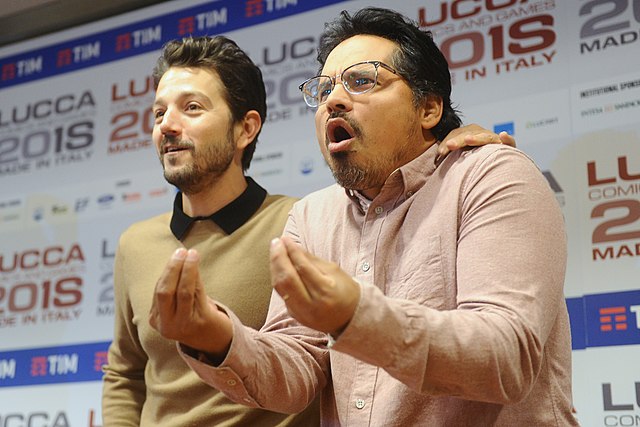
Italians use their hands to enrich communication, driven by a cultural emphasis on clarity, emotional expression, and historical needs. With a Hofstede Uncertainty Avoidance Index of 75, Italians naturally seek explicit ways to convey messages, and gestures provide powerful, immediate clarity.
📊 The Data-Driven Drama: Trust, Clarity, and Assertiveness
Ever wonder if there's a method to the glorious Italian gesticulation? Absolutely. Our deep dive into the numbers reveals more than just passionate flair. Let's start with Hofstede Insights. Italy scores a hefty 75 on Uncertainty Avoidance (UAI). What does that mean? Italians aren't exactly fans of ambiguity. They prefer clear rules, structured communication, and unambiguous messages. Hand gestures are the ultimate clarity hack, adding layers of meaning that words alone might miss, especially when you consider regional dialects once made purely verbal communication a bit of a labyrinth.
Then there's the trust factor. The World Values Survey (WVS) reports Italy's trust index at just 25% in 2022. Ouch. When trust in abstract systems or even general strangers is lower, people often resort to more overt, demonstrative forms of communication to build rapport and ensure their message is truly understood and believed. Visible, physical cues become critical for establishing sincerity and intent, filling the gaps where implicit trust might be weaker.
Combine this with Italy's Individualism (IDV) score of 76 and Masculinity (MAS) score of 70 (Hofstede). High individualism means a strong emphasis on personal expression and self-reliance, while high masculinity often translates into assertive, direct communication. Hands become an extension of that assertive self-expression, a powerful tool for individuals to make their point emphatically and with conviction.
| Dimension | Score | Meaning for Communication |
|---|---|---|
| Uncertainty Avoidance Index (UAI) | 75 | High need for clear, unambiguous communication; overt signals |
| Individualism (IDV) | 76 | Strong emphasis on personal expression and self-reliance |
| Masculinity (MAS) | 70 | Assertive, direct, and demonstrative communication styles |
| Trust Index (WVS) | 25% | Lower generalized trust, leading to more overt signals for sincerity |
📜 From Roman Orators to Regional Rumbles: A Brief History of Hand Waving
To understand the present, we gotta dig into the past. Italy wasn't always a unified nation, remember? For centuries, it was a patchwork of city-states, each with its own dialect, customs, and even currency. Imagine trying to haggle for fresh pasta in Naples when you only speak Milanese – chaos! This linguistic fragmentation meant that nonverbal communication became a powerful, universal language that transcended regional barriers. Gestures became the ultimate common denominator.
And let's not forget the long shadow of ancient Rome. Roman rhetoric wasn't just about elegant prose; it was a full-body performance. Orators used gestures extensively to emphasize points, evoke emotion, and sway public opinion. This performative aspect of communication, where the body is as much a tool as the voice, likely seeped into the cultural consciousness, laying the groundwork for the expressive communication we see today. It’s not just talking with your hands; it’s putting on a show, albeit a natural one.
🤝 The Social Glue: Honor, Family, and Expressive Bonds
Culturally, Italy leans into what academics call an 'honor culture.' This isn't about duels at dawn, but about maintaining reputation, social standing, and respecting interpersonal boundaries while also expressing strong emotional ties. Within a tightly knit family structure, which is central to Italian society (see: 'family-structure' and 'collectivism' tags from our behavioral data), communication is often high-context and highly emotional. Expressive body language helps convey the depth of feeling, sincerity, and commitment within these crucial social bonds.
Think of the Italian dinner table: lively, boisterous, full of overlapping conversations and passionate debates. Hands aren't just for eating; they're for underscoring, for interrupting, for clarifying, for showing agreement or vehement disagreement. They are integral to the very fabric of social interaction, allowing for a rapid, dynamic exchange of complex ideas and emotions without necessarily needing to raise one's voice to an uncouth volume. It’s a collective dance of communication.
🤦 What People Get Wrong: It's Not Just Random Flailing
The biggest misconception? That Italian hand gestures are chaotic, spontaneous outbursts of emotion. While emotion certainly fuels them, these aren't random flails. Many common Italian gestures are highly codified, almost a visual lexicon understood across the country. They can convey specific messages: 'What do you want?' (the infamous 'pursed fingers'), 'Perfect!' (fingers together, pointed up, shaken), or even 'I don't care' (hand brushing under the chin). This is a structured language, not just enthusiastic waving.
Another common mistake is assuming gesticulation always equals anger or aggression. Often, it's simply a way to emphasize a point, express frustration non-aggressively, or even inject humor into a conversation. The context, facial expression, and tone of voice are just as important as the gesture itself. Taking an Italian's hand movements out of context is like judging a book by its cover – you're missing the whole story!
🌍 The Global Hand-Off: Connecting Cultural Gesticulation
Italian hand-talking isn't an isolated quirk; it's part of a broader global pattern of nonverbal communication. Many other Mediterranean cultures, as well as those in parts of the Middle East, Latin America, and even some Asian countries, exhibit similarly rich and expressive gestural repertoires. These often correlate with high-context cultures, where much of the meaning in communication is derived from shared context, subtle cues, and implicit understanding, rather than solely explicit verbal statements. The 'mediterranean-values' tag in our behavioral data is a huge hint here.
The function is often the same: to enhance clarity, convey emotion, reinforce social bonds, and even establish authority or sincerity. In a world where digital communication often strips away these vital nonverbal layers, these cultures remind us of the primal, powerful role our bodies play in making us understood, connecting us, and sometimes, just making sure we're heard over the din of life.
Frequently Asked Questions
While not a formal spoken language, many Italian hand gestures form a highly codified visual lexicon with specific meanings. They function as a powerful, complementary nonverbal communication system.
Not every Italian gesticulates with the same intensity, and some regions might be more prone to it than others. However, it is a deeply ingrained cultural practice that most Italians understand and use to some degree.
When speaking a non-native language, individuals often focus more intensely on verbal grammar and vocabulary, which can suppress natural gestural expression. The cultural context and communication norms of the language being spoken can also influence behavior.
The 'pursed fingers' gesture, where all fingertips are brought together and pointed upwards, often with a slight shaking motion, is arguably the most famous. It can mean 'What do you want?', 'What are you saying?', or 'Are you serious?'