Iran vs. Saudi Arabia: Why the Middle East's Deepest Divide Is All About Culture
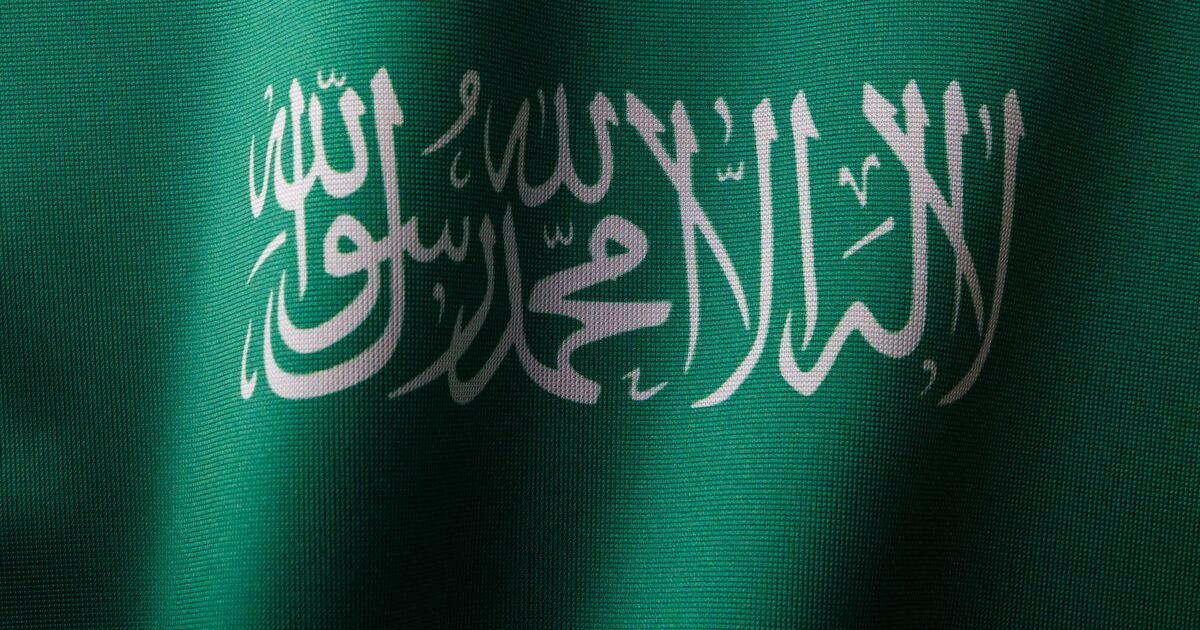
The deepest cultural divide is in hierarchy. Saudi Arabia’s Power Distance score of 95 is among the world's highest, demanding strict deference to authority. Iran, scoring a much lower 58, fosters a more skeptical and questioning relationship with power, influencing everything from its politics to its art.
Decoding the Data: How Iran and Saudi Arabia Stack Up Culturally
To get past the political smoke and mirrors, you need a cultural decoder ring. Ours is the 6-D Model of National Culture, developed by Dutch social psychologist Geert Hofstede. It’s like a cultural MRI, revealing the deep operating systems of a society. When we run Iran and Saudi Arabia through this scanner, the differences are stark and illuminating.
The biggest chasm is Power Distance (PDI), which measures how a society handles inequality. Saudi Arabia scores a colossal 95 out of 100. This indicates a culture where hierarchy is not just accepted but expected. Subordinates anticipate being told what to do, and the ideal boss is a benevolent autocrat. Iran, by contrast, scores a moderate 58. This score suggests a society with a much higher degree of skepticism towards authority. Questioning the boss, the government, or even religious leaders is more ingrained in the cultural DNA. This single number helps explain decades of turbulent Iranian politics versus the top-down stability of the Saudi monarchy.
Next up is Uncertainty Avoidance (UAI). Saudi Arabia scores a high 80, showing a strong preference for fixed rules, predictable structures, and a belief in absolute truths. Change can be a source of stress. Iran’s score of 59 is more moderate, indicating a society that is more comfortable with ambiguity and less rigid in its approach to life. On Individualism (IDV), both are collectivist societies, but Saudi Arabia (25) is more so than Iran (41). This means group loyalty (to family, tribe, or company) is paramount in the Kingdom, while Iranians, though group-oriented, retain a stronger sense of individual identity and opinion.
| Dimension | Iran (IR) | Saudi Arabia (SA) | What it Means |
|---|---|---|---|
| Power Distance (PDI) | 58 | 95 | Acceptance of hierarchy and inequality |
| Individualism (IDV) | 41 | 25 | Degree of interdependence; 'I' vs. 'We' |
| Masculinity (MAS) | 43 | 60 | Preference for achievement vs. cooperation |
| Uncertainty Avoidance (UAI) | 59 | 80 | Tolerance for ambiguity and the unknown |
| Long-Term Orientation (LTO) | 14 | 36 | Focus on future rewards vs. past/present |
| Indulgence (IVR) | 40 | 52 | Gratification of desires vs. restraint |
Persian Empire vs. Arabian Tribes: The Historical Roots of a Modern Rivalry
You can't understand the Iran-Saudi divide without rewinding the clock a few thousand years. Iran is not an Arab country; it is Persia. Its identity is forged from the crucible of ancient empires like the Achaemenids, Parthians, and Sassanids. This is a civilization with a 2,500-year history of centralized statecraft, bureaucracy, art, and philosophy that predates Islam. This imperial legacy fosters a powerful sense of national pride and a historical memory of being a regional hegemon. The pre-Islamic religion of Zoroastrianism also left an indelible mark on Persian thought, emphasizing a cosmic struggle between good and evil, a concept that subtly influences their worldview even today.
Saudi Arabia’s story is entirely different. Its identity is rooted in the harsh desert landscape of the Arabian Peninsula, the birthplace of Islam. Before the 20th century, its social structure was overwhelmingly tribal and nomadic. Power was decentralized, based on kinship and allegiance. The modern state was formed through a pact between the House of Saud, a powerful tribal dynasty, and the followers of Muhammad ibn Abd al-Wahhab, a puritanical religious reformer. This dual foundation makes Saudi identity inseparable from its role as the custodian of Islam’s two holiest sites, Mecca and Medina, and the guardian of a specific, conservative interpretation of Sunni Islam. The 1979 Iranian Revolution threw this historical dynamic into overdrive, creating a revolutionary Shi'a theocracy that directly challenged the legitimacy of the conservative Sunni monarchy across the Gulf.
Taarof, Wasta, and Social Code: The Sociology of Iranian and Saudi Life
The Hofstede data comes alive in the daily interactions of Iranians and Saudis. Saudi Arabia's high Power Distance (95) and low Individualism (25) are the sociological bedrock of concepts like wasta. Wasta is the use of personal connections and influence to get things done. It's not seen as corruption but as a natural function of a collectivist society where who you know is paramount. Social life often revolves around the majlis or diwaniya, gatherings where community ties are reinforced under a clear patriarchal hierarchy.
Iranian society, with its lower PDI (58) and higher IDV (41), presents a more complex social fabric. A key concept is taarof, an intricate system of politeness and etiquette where offers are made that are not meant to be accepted and true intentions are masked by layers of courtesy. While baffling to outsiders, it’s a way of navigating social interactions in a society that values poetic expression and indirectness. There is a palpable tension between public life, governed by strict state rules, and private life, which is often far more liberal and individualistic. This public/private split is a classic coping mechanism in societies where citizens feel a disconnect from the ruling authority, a direct reflection of that moderate PDI score.
Furthermore, poetry isn't just a high-art form in Iran; it's woven into everyday language and thought. Quoting poets like Hafez or Rumi in conversation is common, a testament to a culture that values intellectual and philosophical debate, often as a subtle form of resistance or commentary.
Beyond the Chador and the Thobe: What Everyone Gets Wrong About Iranians and Saudis
Western media often flattens both cultures into one-dimensional caricatures. The stereotype of Iran is a nation of 88 million grim-faced, chanting zealots. The reality? A deeply complex society with one of the most educated and pro-Western populations in the Middle East. Internet penetration is high, and a massive youth demographic (over 60% under 30) chafes under the regime's restrictions. This generation uses VPNs, follows global trends, and has repeatedly risked everything to protest for greater freedom. The image of the regime is not the image of the people.
The parallel stereotype for Saudi Arabia is the billionaire oil sheikh in a white thobe, spending lavishly in London. This ignores the vast majority of the population and the seismic shifts underway. The country has a burgeoning middle class facing real-world economic pressures like housing costs and job creation. The government's Vision 2030 plan is a frantic, top-down attempt to modernize the economy precisely because the old oil-funded social contract is no longer sustainable. Moreover, the narrative of oppressed women, while rooted in a history of severe restrictions, is now complicated. Both Iran and Saudi Arabia have higher female-to-male ratios in universities than many Western countries, including the United States and Germany (World Bank data). This creates a powerful, educated female cohort whose ambitions are reshaping their societies from within.
The Big Picture: Where Iran and Saudi Arabia Fit in Global Cultural Patterns
When you zoom out, the Hofstede data shows that Saudi Arabia and Iran don't just differ from each other; they belong to different cultural constellations. Saudi Arabia’s scores—very high Power Distance (95), high Uncertainty Avoidance (80), and low Individualism (25)—are a textbook example of the cultural profile found across much of the Arab world. Countries like Egypt, Iraq, and the UAE show similar patterns. This profile, as described in frameworks like the GLOBE Project on Global Leadership, correlates with societies that value tradition, clear hierarchical structures, and strong in-group loyalty.
Iran is the regional outlier. Its cultural DNA is a hybrid. The moderate PDI score (58) makes it far more egalitarian than its Arab neighbors and places it closer to some Southern European countries like Spain (57) or France (68) in its attitude towards authority. Its moderate Uncertainty Avoidance (59) suggests a greater cultural capacity for adaptation and ambiguity. This unique position reflects its history as a cultural crossroads. It is not Arab, nor is it 'Eastern' in the same way as China or Japan, nor is it 'Western.' This 'in-betweenness' is a core part of its national identity. It helps explain why its political system is also a strange hybrid—an Islamic Republic with both theocratic and democratic elements—and why its society is a constant negotiation between tradition and modernity.
Vision 2030 vs. Digital Dissent: How the Youth Are Forcing a New Reality
The deepest cultural schisms are now playing out between the governments and their own people. In Saudi Arabia, Crown Prince Mohammed bin Salman is driving Vision 2030, a radical, top-down social and economic revolution. Lifting the ban on women driving, opening cinemas, and hosting music festivals are not just cosmetic changes; they are calculated moves to appease a massive youth population that is more connected to the world via TikTok and Snapchat than to old tribal traditions. It is a high-stakes gamble to trade personal freedoms for continued political acquiescence, directly addressing the country's low Indulgence score (52) by offering more avenues for leisure and fun.
Iran faces the opposite dynamic: a bottom-up explosion of dissent from a populace that has long outgrown the revolutionary ideology of 1979. The widespread protests sparked by the death of Mahsa Amini in 2022 were not just about the mandatory hijab; they were a manifestation of a deep cultural disconnect between an aging, rigid regime and a young, dynamic society demanding 'Woman, Life, Freedom.' The Iranian government’s low Long-Term Orientation score (14) reflects a focus on maintaining ideological purity in the present, often at the expense of pragmatic planning for the future. This puts it on a collision course with its own people, who are using every digital tool at their disposal to organize and demand change. The real Iran-Saudi rivalry in the 21st century may be less about proxy wars in Yemen and more about which government can successfully manage the explosive aspirations of its under-35 population.
Frequently Asked Questions
The rivalry is a complex mix of historical, religious, and political factors. Historically, it's a competition between Persian and Arab spheres of influence. Religiously, it's framed as a conflict between the Shi'a leadership in Iran and the Sunni leadership in Saudi Arabia. Politically, they compete for regional dominance through alliances and proxy conflicts.
No. Iranians speak Persian (Farsi), which is an Indo-European language. Saudis speak Arabic, which is a Semitic language. They have completely different grammatical structures and origins, although both use a similar script.
No, this is a common misconception. Iran is a Persian country with its own distinct language, culture, and history that stretches back thousands of years before the Arab conquests.
Iran is the world's largest Shi'a Muslim majority country, with a government that is an Islamic theocracy based on Shi'a principles. Saudi Arabia has a Sunni Muslim majority, and its state-sanctioned interpretation of Islam is a strict, puritanical form known as Wahhabism.
According to Hofstede's cultural dimensions, the single greatest difference is Power Distance. Saudi Arabia scores 95, indicating a very hierarchical society that accepts inequality. Iran scores a much lower 58, suggesting a more questioning and skeptical attitude towards authority.