From Fishing Village to Megalopolis: What Really Happens When a City Explodes in Population?
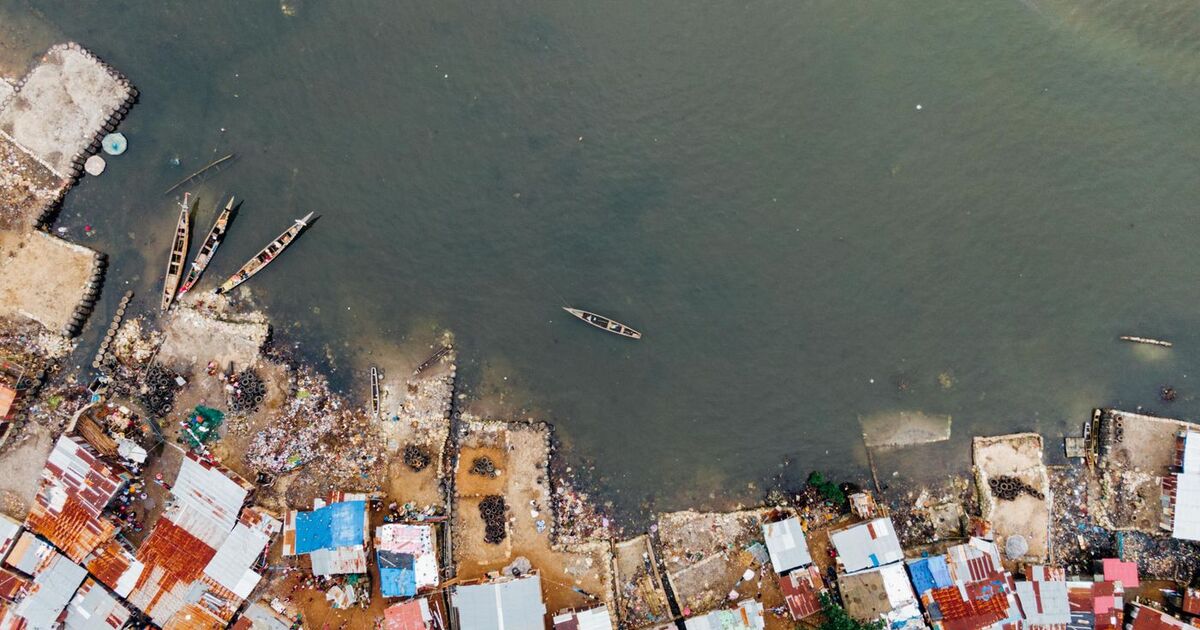
When a village explodes into a megacity, it experiences a 'compressed modernity' effect. In just 40 years, Shenzhen’s population grew by over 58,000%, transforming social trust, family structures, and economic identity from collectivist agrarian norms to hyper-individualistic urban competition.
By the Numbers: The Shocking Speed of Urban Metamorphosis
Let's get one thing straight: the growth of cities like Shenzhen isn't just fast; it's a statistical anomaly that breaks all historical models. While London took 130 years to grow from 1 million to 8 million people, Shenzhen rocketed from a town of 30,000 to a sprawling metropolis of over 17 million in a single generation. This isn't growth; it's a big bang in urban form. The economic numbers are even more staggering. In 1980, its GDP was a mere $196 million USD. By 2023, it surpassed $475 billion, making its economy larger than that of South Africa or Finland (World Bank, 2023).
This explosion wasn't just in people and money; it was a physical transformation of the landscape itself. The city became a vertical forest of steel and glass. In the early 1990s, the construction boom was so frantic it gave rise to the term 'Shenzhen Speed,' with the city averaging the completion of a new skyscraper every few days. Today, it has more skyscrapers (buildings over 150m) than the entire United States, except for New York and Chicago combined. Its subway system, non-existent before 1999, now spans over 500 kilometers, one of the longest in the world. This data isn't just trivia; it's the framework for understanding the immense pressure cooker environment. This hyper-speed development compresses decades of social, economic, and infrastructural change into a few short years, creating a unique and often brutal urban experience.
| Metric | 1980 (approx.) | 2023 (approx.) |
|---|---|---|
| Population | 30,000 | 17.6 million (metro area) |
| GDP (USD) | $196 million | $475 billion |
| Skyscrapers (>150m) | 0 | 160+ |
From Fish to Fintech: The Historical Policy That Created a Megacity
Shenzhen's metamorphosis from sleepy fishing town to global tech hub wasn't an accident or an organic process. It was a calculated, top-down geopolitical experiment. Before 1980, the area was known as Bao'an County, a quiet border region next to British-controlled Hong Kong, primarily known for its oyster farms and fishing fleets. Its main export was people fleeing the poverty of Mao's China. Everything changed in 1980 when paramount leader Deng Xiaoping designated Shenzhen as China's first Special Economic Zone (SEZ). This was a radical move for a staunchly communist country. The SEZ was essentially a laboratory for market capitalism, a contained space where foreign investment was welcomed, private enterprise was encouraged, and export-oriented industries were subsidized.
A fence was literally erected around the zone to separate this capitalist experiment from the rest of socialist China. This policy decision acted like a massive magnet. It drew in a tsunami of foreign capital, particularly from neighboring Hong Kong, and, crucially, millions of ambitious migrant workers from China's impoverished rural interior. This 'floating population' became the engine of Shenzhen's growth, providing the labor to build the factories, skyscrapers, and infrastructure. As historian Mary Ann O'Donnell notes in *Learning from Shenzhen*, the city was intentionally designed as a 'blank slate' where the old rules of Chinese society didn't apply, allowing for unparalleled speed in development and social change. It wasn't born; it was engineered.
The Social Whiplash: How Community and Trust Get Rewired
What happens when you take millions of people from small, stable villages and drop them into a chaotic, anonymous urban free-for-all? You get sociological whiplash. This transition mirrors the classic concepts of German sociologist Ferdinand Tönnies: the shift from *Gemeinschaft* (community) to *Gesellschaft* (society). *Gemeinschaft* describes village life: relationships are personal, deep, and based on kinship and shared history. Trust is high. *Gesellschaft* describes urban life: relationships are impersonal, transactional, and based on contracts and self-interest. Trust is calculated.
In Europe, this transition took centuries. In Shenzhen, it happened in a single generation. A farmer who grew up in a high-trust village where a handshake was a binding contract was suddenly working in a city where formal, legal agreements were paramount. This shift has measurable consequences. Studies from institutions like Peking University have shown that residents in new, migrant-heavy cities like Shenzhen consistently report lower levels of social trust in strangers compared to residents of older, more established cities like Beijing. To cope, migrants created 'urban villages' (*chengzhongcun*), dense, low-rent enclaves within the gleaming city where they could recreate a sense of community with people from their home provinces. These villages became islands of *Gemeinschaft* floating in a sea of *Gesellschaft*, highlighting the profound human need for connection in the face of rapid, disorienting change.
Myth Busting: It's Not Just a Shiny New City, It's a 'City of Strangers'
The common perception of Shenzhen, fueled by glossy magazine spreads and tech documentaries, is of a hyper-modern utopia—a city of ambitious entrepreneurs, brilliant engineers, and overnight millionaires. This narrative isn't entirely false, but it's dangerously incomplete. The myth is that this growth created a seamless, universally prosperous society. The reality is a deeply stratified 'City of Strangers' with a hidden social caste system.
The critical piece of the puzzle people miss is the *hukou* system, China's household registration policy. Most of the millions who flocked to Shenzhen to build it came on a rural *hukou*. Even if they've lived in the city for decades, without a local Shenzhen *hukou*, they are considered temporary residents. This denies them and their children full access to the city's public services, including subsidized healthcare, social security, and, most critically, placement in the best public schools. This creates a massive underclass that powers the city's economy but can't fully participate in its social contract. The gleaming skyline seen in promotional videos was built by people who, for a long time, were not allowed to feel like they truly belonged. This isn't a simple story of upward mobility; it's a complex tale of ambition colliding with rigid social structures, creating what sociologist John R. Logan calls a 'new geography of inequality'.
The Global Blueprint: Connecting Shenzhen's Story to Cultural Frameworks
Shenzhen's story isn't just a Chinese one; it's a dramatic example of a global pattern where state-led development clashes with deep-seated cultural values. We can decode this using frameworks like Geert Hofstede's cultural dimensions. Traditional Chinese culture scores high on Long-Term Orientation (valuing persistence and thrift for future rewards) and is strongly collectivist (prioritizing the group over the individual). The Shenzhen model masterfully weaponized these traits. The state appealed to the collectivist duty to build a strong nation and the long-term orientation to sacrifice now for a better future.
However, the environment it created—a hyper-competitive, capitalist free-for-all—is radically individualistic. This creates a cultural paradox: a collectivist society is pushed into individualistic behavior, causing immense psychological tension. This pattern repeats in other rapidly urbanizing hubs. In Dubai, a traditional, conservative Islamic society hosts a transient, hyper-consumerist expatriate culture. In Lagos, Nigeria, strong communal and ethnic ties are strained by the anonymous, competitive pressures of a megacity. These cities become, as sociologist Manuel Castells describes, key nodes in the global 'space of flows.' They are more connected to global financial and cultural networks in New York, London, and Tokyo than they are to their own rural hinterlands. They are laboratories for a new, globalized urban identity that constantly negotiates a tense truce between traditional culture and market logic.
Today's Megacity: Navigating Life in a Man-Made Jungle
So what is life like in Shenzhen now that the dust has settled? The 'Wild West' era of raw, unregulated growth is over. Today, Shenzhen is a global powerhouse of tech and innovation, home to giants like Tencent and Huawei. It’s cleaner, greener, and more orderly than in its chaotic youth. Yet, the social challenges born from its rapid creation persist and have evolved. The city is grappling with some of the world's most expensive real estate, pricing out the next generation of ambitious migrants. The intense work culture, known as '996' (9 am to 9 pm, 6 days a week), has become a subject of national debate about burnout and quality of life.
In response to the deep-seated anonymity, residents are actively forging new forms of community. They are building their own *Gemeinschaft*. Niche hobby groups, from hiking clubs to coding bootcamps to improv comedy troupes, are flourishing. Online forums and neighborhood WeChat groups have become vital social lifelines. The city itself is trying to retrofit a soul onto its ruthlessly efficient skeleton. The government is pouring billions into arts and culture, building world-class museums, concert halls, and libraries. This is a fascinating attempt to reverse-engineer a cultural identity for a city that, as the local saying goes, 'has a future but no past.' The modern reality is a constant, dynamic negotiation between the relentless demands of the market and the enduring human need for meaning, history, and belonging.
Frequently Asked Questions
Their growth is not organic. It's driven by top-down government policies, like creating Special Economic Zones (SEZs), that offer massive incentives for foreign investment and trigger a huge wave of domestic migration from rural areas seeking economic opportunity.
An urban village, or *chengzhongcun*, is a neighborhood within a modern city that was once a rural village. As the city expanded around it, it retained its dense, low-rise buildings and social networks. They often serve as affordable housing for migrant workers, creating islands of traditional community within the metropolis.
It can lead to significant stress, anxiety, and loneliness. The breakdown of traditional family and community support networks, combined with intense economic competition and the anonymity of city life, can create what sociologists call 'anomie,' a sense of normlessness and social disconnection.
It's a major debate. Economically, it can be a powerful engine for development. However, it poses huge sustainability challenges, including extreme housing costs, immense pressure on public services, severe traffic congestion, environmental pollution, and widening social inequality.
Yes. The second generation, born and raised in a city like Shenzhen, often has a completely different identity from their migrant parents. They are 'native' to the fast-paced, individualistic, and tech-driven urban environment and may feel disconnected from their parents' rural origins, creating a unique generational and cultural gap.