So, Are the Portuguese Really That Melancholic?
Portugal's famous melancholy isn't just a vibe; it's rooted in cultural data. With a sky-high Uncertainty Avoidance score of 99 and a low Indulgence score of 33, Portuguese culture leans towards managing anxiety and restraining impulses, creating a backdrop for the bittersweet feeling of 'saudade'.
The Data Behind the Drama: Portugal's Cultural DNA
Before we dive into sad songs and moody poets, let's look at the numbers. Stereotypes are messy, but data can offer clues. The go-to framework for this is Geert Hofstede's cultural dimensions theory, a massive cross-cultural study. And Portugal's scores are, frankly, wild. The most glaring number is Uncertainty Avoidance (UAI), which sits at a staggering 99 out of 100. This doesn't mean Portuguese people avoid risk; it means they have a very high emotional need for rules and predictability to manage inherent anxiety about the future. Life is perceived as stressful and uncertain, so society creates structures, both formal and informal, to cope. Think bureaucracy, religion, and strong social norms.
Then there's the Indulgence versus Restraint (IVR) score, a very low 33. This points to a 'Restrained' culture, one that places less emphasis on leisure time and gratification of desires. In these societies, there's a sense that indulging oneself is somewhat wrong. When you combine a deep-seated anxiety about the future (UAI 99) with a cultural tendency to suppress joyful impulses (IVR 33), you get a recipe for a society that appears more pessimistic or cynical. This isn't sadness for sadness's sake; it's a cultural operating system geared towards caution and control, not freewheeling optimism. Add a low Individualism score of 27, and you see that these feelings are processed collectively, not in isolation. It's a shared burden and a shared experience, which is a crucial piece of the puzzle.
| Dimension | Portugal (PT) | World Average (Approx.) |
|---|---|---|
| Uncertainty Avoidance | 99 | 64 |
| Individualism | 27 | 43 |
| Indulgence | 33 | 45 |
| Power Distance | 63 | 55 |
From Global Empire to Fado Blues: The Historical Roots of Portuguese Saudade
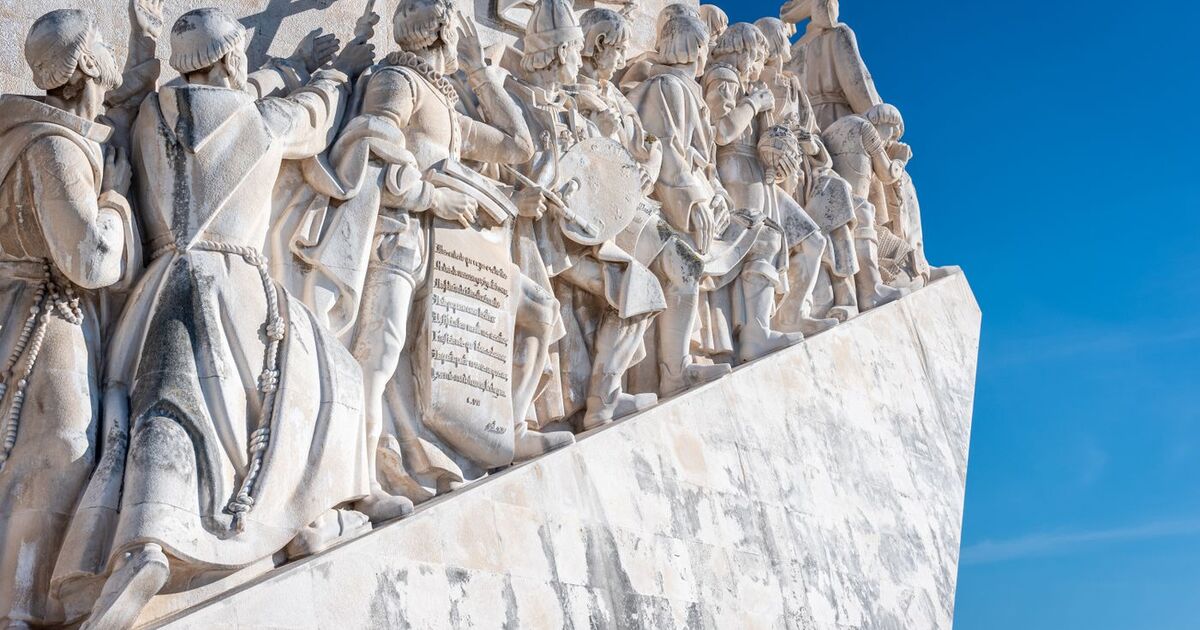
You can't understand Portuguese melancholy without understanding its whiplash history. In the 15th and 16th centuries, this tiny country on the edge of Europe built one of the world's first and largest global empires. The Age of Discoveries brought unimaginable wealth, power, and prestige. Lisbon was the center of the universe. But empires crumble. This golden age was followed by centuries of decline, including the devastating 1755 Lisbon earthquake that didn't just flatten the city but also shattered the nation's philosophical and religious confidence. Imagine being on top of the world and then having it literally and figuratively crumble beneath your feet.
This theme of lost glory is a powerful undercurrent in the national psyche. It’s the phantom limb of a once-great empire. Fast forward to the 20th century, and Portugal endured nearly 50 years of the Estado Novo dictatorship under Salazar. This period (1933-1974) was marked by isolationism, censorship, and enforced traditionalism. It effectively paused the country's development while the rest of Europe was rebuilding and modernizing after WWII. This history—a spectacular rise, a catastrophic fall, and a long period of stagnation—has cultivated a collective memory steeped in nostalgia for what was and a certain fatalism about what is. This isn't just ancient history; it's the narrative backdrop to the famous Portuguese 'saudade'.
The Sociology of Saudade: More Than Just 'Missing You'
Let's talk about the word: *saudade*. It's famously 'untranslatable', but that's a cop-out. It's a complex emotion, a bittersweet cocktail of nostalgia, longing, and a vague, persistent sense of absence. It's missing something or someone that might never return, or may have never even existed. Sociologically, saudade is more than a feeling; it's a cultural script. It's a socially acceptable, even poetic, way to process grief, loss, and the anxieties highlighted by that 99 UAI score. In a collectivist culture (IDV of 27), sharing this feeling in music, poetry, and conversation is a powerful form of social bonding. It says, 'We all feel this. We have all lost something. We are in this together'.
Think of it as an emotional technology. It takes the sharp edges off personal pain by elevating it to a shared, almost beautiful, universal experience. The writer Manuel de Melo defined it as 'a pleasure you suffer, an ailment you enjoy'. This duality is key. It's not debilitating depression; it's an active, reflective state. Scholars like Aubrey Bell, in his 1912 book 'In Portugal', noted that this sentiment wasn't about weakness, but a kind of deep, stoic resilience. It allows for the public expression of vulnerability without sacrificing dignity. It’s the glue that holds the collective emotional fabric together, a way to acknowledge the harshness of fate while finding beauty within it.
Myth Busted: Why Portuguese Melancholy Isn't the Whole Story
Okay, so we've got a nation of sad poets staring at the sea, right? Wrong. This is the biggest misunderstanding about Portugal. The stereotype of the quiet, melancholic Portuguese completely ignores the other side of the coin: a loud, vibrant, and intensely social culture. The same people who sing Fado also throw the Santos Populares festivals in June, where entire neighborhoods in Lisbon and Porto turn into massive, chaotic street parties with grilled sardines, loud music, and dancing until dawn. It's anything but restrained.
This isn't a contradiction; it's a consequence of Portugal's low Individualism score of 27. Emotions, both happy and sad, are expressed communally. Joy isn't a quiet, internal state; it’s a loud, shared experience at a family dinner that lasts for hours, a passionate football match, or a neighborhood festival. The 'melancholy' is the quiet hum in the background, but the foreground is often filled with noise, food, and people. Foreigners often mistake the formal politeness required by a high Power Distance culture (PDI of 63) for aloofness, but once you're welcomed into the fold, the warmth is overwhelming. The stereotype focuses on the poetry of sadness but misses the prose of everyday, boisterous life. The Portuguese aren't melancholic; they're emotionally expressive, and that emotional spectrum includes both soaring joy and deep saudade.
Decoding the Cultural Pattern: How Anxiety and Collectivism Shape a Nation
So what's the underlying pattern here? It's the powerful interplay between extreme Uncertainty Avoidance (UAI) and strong Collectivism (low IDV). A UAI score of 99, as noted by Hofstede Insights, creates a society that is deeply uncomfortable with ambiguity. This leads to a desire for rigid codes of belief and behavior. There's a right way to do things, from cooking a traditional dish to expressing emotion. This need for structure can manifest as a form of social fatalism. The Portuguese expression 'Oxalá', derived from the Arabic 'Inshallah' ('God willing'), perfectly captures this sentiment—a hope for the best, but an acceptance that the ultimate outcome is out of one's hands. This reduces anxiety.
But this isn't an individualistic struggle. With an Individualism score of just 27, Portugal is a collectivist society. People belong to 'in-groups'—family, close friends, the local community—that provide protection in exchange for loyalty. The anxieties of life are managed not by individual striving, but by leaning on the group. This is why Fado works: one person sings of their personal 'saudade', but everyone in the room feels it collectively. This cultural combination is common in many Southern European and Latin cultures. Greece, for example, also has extremely high UAI and is strongly collectivist. The pattern is clear: when the world feels uncertain, you cling to your rules and your people. The Portuguese melancholy is simply the distinct flavour that history and language have given to this universal human pattern.
The Modern Reality: Is Portugal Trading Saudade for Startups?
So, what does this all mean in the 21st century? Portugal is changing, and fast. Since joining the EU and especially over the last decade, the country has experienced a tourism boom and the rise of a thriving tech scene, particularly in Lisbon. The 'California of Europe' narrative is taking hold, attracting digital nomads and foreign investment. This influx of global capital and different cultural norms is inevitably challenging the old ways. Younger, urban Portuguese who grew up with open borders, the internet, and a more stable economy may not feel the weight of history in the same way as their parents or grandparents.
Is saudade becoming a brand? Absolutely. It’s marketed to tourists through Fado restaurants and melancholic poetry, sold as an 'authentic' experience. This commercialization can dilute its meaning, turning a deep cultural sentiment into a consumable product. Yet, the core cultural programming remains. The bureaucracy is still complex (a UAI hallmark), family is still central (Collectivism), and the economic crises of the recent past have reinforced a sense of caution. The modern reality is a hybrid: a nation that is embracing a more optimistic, globalized future while still being profoundly shaped by its historical and cultural DNA. The melancholy isn't gone, but it now shares the stage with a new, more pragmatic and future-oriented optimism. The question for modern Portugal is how to integrate its powerful past without being trapped by it.
Frequently Asked Questions
'Saudade' is a deep emotional state of nostalgic or profound longing for an absent something or someone that one loves. It often carries a repressed knowledge that the object of longing might never return. It's a mix of sadness, nostalgia, and love.
While Fado is famously melancholic, with lyrics often about fate, loss, and the sea, it's not exclusively sad. It's more about deep emotion, which can include jealousy, love, and storytelling about life in the city's old quarters. The defining characteristic is its emotional intensity, not just sadness.
The Portuguese culture, influenced by its history and a high Uncertainty Avoidance score, does have a strain of fatalism. Expressions like 'Oxalá' (God willing) and the concept of 'Fado' (fate) suggest an acceptance that some things are beyond personal control. However, this is balanced with strong resilience and community spirit.
They can be both, which confuses many visitors. There is a cultural layer of formality and politeness in initial interactions (high Power Distance). However, within their 'in-group' of family and friends, they are typically very warm, expressive, and loud. It's a culture of strong social circles.
Economic shifts have a significant impact. The austerity following the 2008 financial crisis reinforced a sense of pessimism. Conversely, the recent economic recovery, fueled by tourism and tech, has injected a new wave of optimism and national pride, especially among the younger generation in urban centers.