Are Brazilians Constantly Partying? We Ran the Cultural Numbers.
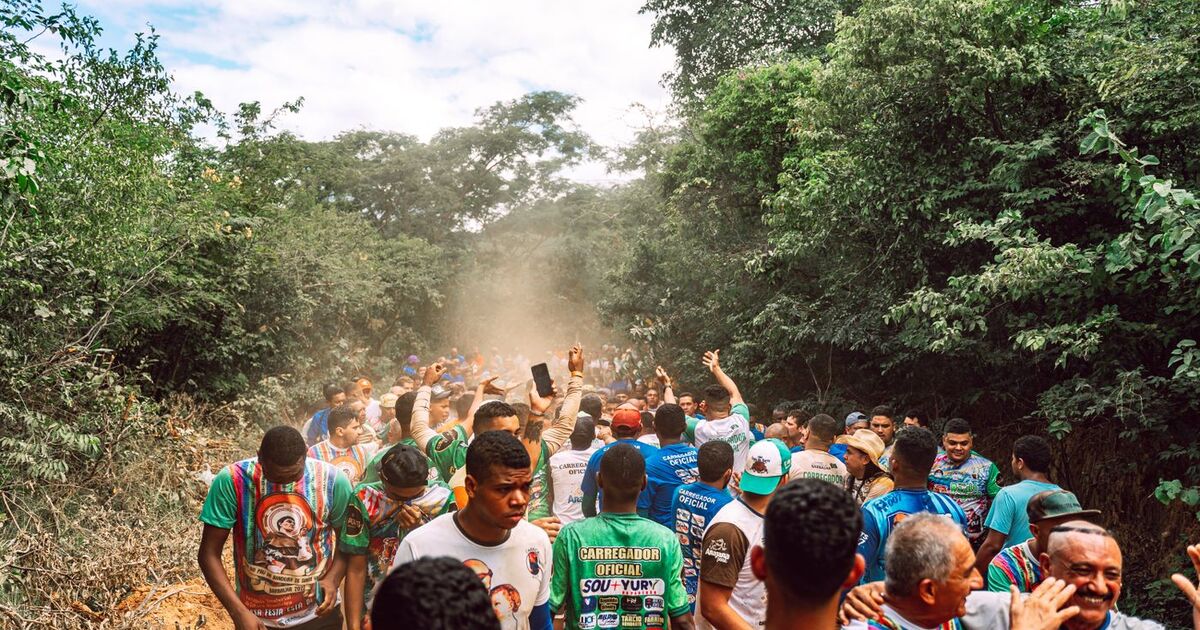
Not quite. While Brazil's high Indulgence score of 59 confirms a culture that values joy and leisure, this coexists with a demanding work life. The 'party' is less about constant hedonism and more about vital social connection in a highly collectivist society.
By the Numbers: Is There a 'Party' Metric for Brazil?
Let's get one thing straight: there's no official 'National Party Index.' You can't measure a country's affinity for a good time in hours per week. That would be absurd. What we can do is look at the cultural operating system running in the background. For that, we turn to the work of cultural psychologist Geert Hofstede, whose massive data set gives us a six-dimensional look at national cultures.
When it comes to partying, the most relevant metric is Indulgence versus Restraint (IVR). This dimension measures the extent to which a society allows for the free gratification of basic and natural human drives related to enjoying life and having fun. Brazil scores a 59 on Indulgence. This is a high score, indicating a culture where people feel that indulging their desires, spending money, and enjoying leisure time are perfectly valid life goals. They are optimistic and prioritize personal happiness. This is the data point that fuels the stereotype.
But wait. The story gets complicated when you look at another score: Uncertainty Avoidance (UAI), where Brazil scores a sky-high 76. This score reflects a society's tolerance for ambiguity. A high score means Brazilians have a low tolerance for the unknown. They crave rules, structure, and clear plans, even if they don't always follow them. This creates a fascinating paradox: a culture that wants to enjoy life freely but also feels deep anxiety about an unstructured future. The 'party' isn't just chaos; it's often a highly structured, planned event that provides a predictable release from this underlying anxiety.
| Dimension | Brazil Score | Japan Score |
|---|---|---|
| Indulgence (IVR) | 59 (Indulgent) | 42 (Restrained) |
| Uncertainty Avoidance (UAI) | 76 (High) | 92 (Very High) |
| Individualism (IDV) | 38 (Collectivist) | 46 (Collectivist) |
From Sugar Plantations to Samba: The Historical Roots of Brazilian Celebration
To understand why public celebration is so central to Brazilian identity, you have to look at how the country was formed. Brazil isn't a nation built on a single ethnic identity, but a complex tapestry of syncretism. The Portuguese colonizers brought their brand of hierarchical Catholicism, with its calendar full of saints' days and festivals, most notably Carnaval, the 'farewell to the flesh' before Lent.
But this was just one thread. Enslaved Africans, brought to Brazil in vast numbers to work the sugar and coffee plantations, carried their own rich traditions of music, dance, and communal religious celebration. Rhythms that would eventually evolve into samba were born in this context. These celebrations were not just parties; they were acts of cultural survival and resistance. In the face of brutal oppression, they were spaces to maintain identity and community.
Finally, Indigenous peoples contributed a deep connection to nature and communal living. This fusion created a unique public sphere. Unlike in more puritanical colonial societies, the Brazilian street and public square (*a praça*) became legitimate arenas for social life and expression. As anthropologist Roberto DaMatta argues, holidays like Carnival became ritualized moments where the rigid social hierarchies of everyday life could be temporarily inverted, creating a powerful, unifying social release valve. This history embedded celebration deep into the nation's DNA, not as a frivolous escape, but as a fundamental part of its social and political history.
It’s Not a Party, It’s Networking: The Sociology of the Brazilian 'Churrasco'
If you think a Brazilian *churrasco* (barbecue) is just about grilling meat and drinking beer, you're missing the entire point. It's a complex social ritual, and understanding it is key to decoding Brazilian culture. With a low Individualism score of 38, Brazil is a collectivist society. This means identity is defined by the group ('we' before 'I'), and social harmony is paramount. Your success in life—from getting a job to fixing a bureaucratic problem—often depends less on what you know and more on who you know.
This is where the famous *'jeitinho brasileiro'* (the Brazilian way) comes in. It's the art of creatively bending rules and navigating a complex bureaucracy through personal connections. And where are these connections made and maintained? At social gatherings. The party is the office. Sociologist Sergio Buarque de Holanda described the 'cordial man' as the quintessential Brazilian, someone for whom personal relationships and emotions always trump impersonal laws and regulations. This cordiality is the currency of the realm.
Your network, or *'panelinha'* (literally 'little saucepan,' meaning clique), is your most valuable asset. A weekend gathering isn't just leisure; it's an investment in your social capital. You're not just 'hanging out'; you're reinforcing bonds, exchanging information, and subtly positioning yourself within the group. In a country with a high Power Distance score (69), where hierarchies are steep and official channels are slow, this informal network is the system that actually gets things done.
The 'Lazy Partier' Myth vs. São Paulo's 24/7 Grind
The biggest misconception is that a culture that values partying must, by extension, be lazy. This stereotype, plastered across tourism brochures showing idyllic beaches, conveniently ignores the economic powerhouse of Brazil. Let's talk about São Paulo. Home to over 12 million people, it's the financial heart of Latin America, a sprawling metropolis that runs on ambition and caffeine, not caipirinhas. The work culture in 'Sampa,' as it's known, is famously grueling.
The numbers back this up. According to data from the International Labour Organization (ILO), the average actual weekly hours worked per employed person in Brazil is around 39.5 hours (ILOSTAT, 2022). This is right in line with many developed nations and debunks any notion of a 'siesta culture.' In fact, many Brazilians work multiple jobs or run side hustles, known as *'bicos,'* to cope with economic instability and a high cost of living. The stereotype of the relaxed beach-dweller completely erases the reality of the urbanite juggling a long commute, a demanding job, and family responsibilities.
The 'party' culture isn't a sign of laziness; it's a consequence of the grind. When life is stressful and uncertain (remember that high UAI score?), the need to decompress and connect with loved ones becomes more, not less, important. The weekend celebration is the necessary psychological reward for a week of hard work. Conflating sociability with a poor work ethic is a fundamental misreading of the cultural script.
Why Brazil Fits the 'High-Context, High-Hugs' Cultural Pattern
Brazil's cultural profile isn't an anomaly; it fits a well-established global pattern. The combination of high Power Distance (69), low Individualism (38), and high Indulgence (59) is characteristic of many Latin American, African, and Mediterranean societies. These are often described by sociologists as relationship-based or 'high-context' cultures, a term coined by anthropologist Edward T. Hall.
In high-context cultures, communication is less direct and more dependent on shared understanding, non-verbal cues, and the relationship between speakers. Meaning is found in the context, not just the words. A business meeting might start with 30 minutes of talk about family. A 'yes' might mean 'I hear you' rather than 'I agree.' Social gatherings are the primary venues for building this shared context. They are where trust is established, which is the prerequisite for everything else, from business deals to personal favors.
This contrasts sharply with 'low-context' cultures like Germany, the Netherlands, or the United States. In these societies, communication is expected to be explicit, direct, and efficient. Relationships are secondary to the task at hand. This is why a Brazilian's tendency to prioritize a social conversation over strict punctuality can be misinterpreted. It's not a lack of respect for time; it's a greater respect for the relationship. The 'party' is simply the most visible expression of this deep-seated cultural preference for building context and reinforcing the group.
Hustle, Burnout, and Botox: Brazil's Modern Pursuit of Happiness
In 21st-century Brazil, the cultural inclination for indulgence has found new, complex expressions. The pressure to enjoy life now coexists with the intense demands of modern hustle culture. This is evident in the grueling world of *'concurseiros,'* people who study for 8-12 hours a day, often for years, to pass competitive civil service exams for a stable job. For them, the party is a distant dream, replaced by a culture of extreme academic dedication.
At the same time, the 'happiness imperative' is amplified by social media, creating what's known as *'pressão estética'* (aesthetic pressure). Brazil is one of the world's largest markets for plastic surgery and aesthetic procedures. This isn't just vanity; in a culture that values appearance and social performance, investing in one's looks is seen as an investment in personal and professional success. It's the Indulgence dimension manifested as a form of self-optimization.
For the average urban Brazilian, the modern reality is a balancing act. They face economic precarity, urban violence, and digital burnout. In this context, the traditional social gathering—the family lunch, the weekend *churrasco*, the neighborhood samba circle—takes on a new role. It's no longer just a party. It's a consciously chosen act of self-care, a vital strategy for maintaining mental health and resilience. The modern Brazilian doesn't party because life is easy; they party because life is hard, and connection is the best antidote.
Frequently Asked Questions
No, this is a common misconception that confuses Brazilian culture with stereotypes of some Spanish-speaking countries. While a long lunch break exists in some smaller towns, in major urban and business centers, the workday is standard and does not include a siesta.
Yes and no. It's a massive cultural event and a national holiday, especially in cities like Rio de Janeiro, Salvador, and Olinda. However, many Brazilians use the long holiday to travel, relax, or escape the crowds, so not everyone is actively participating in the street parties.
This is rooted in Brazil's collectivist culture (low Individualism score of 38). Social harmony, warmth, and building personal relationships are highly valued. Cordiality is a key social lubricant, and what might seem like over-friendliness to an outsider is standard practice for building trust.
Brazil tends to have a more fluid, polychronic concept of time, especially in social contexts. This means prioritizing relationships and events over strict adherence to a schedule. For social events, being 'on time' can mean arriving 30 minutes after the stated start.
It's more accurate to say that family and personal relationships are seen as integral to and supportive of one's work and life. As a collectivist culture, the family and close-knit social circle are the primary support system, often taking precedence over the impersonal demands of a corporation.