Turkish vs. Greek Culture: Are They Just Sibling Rivals on a National Scale?
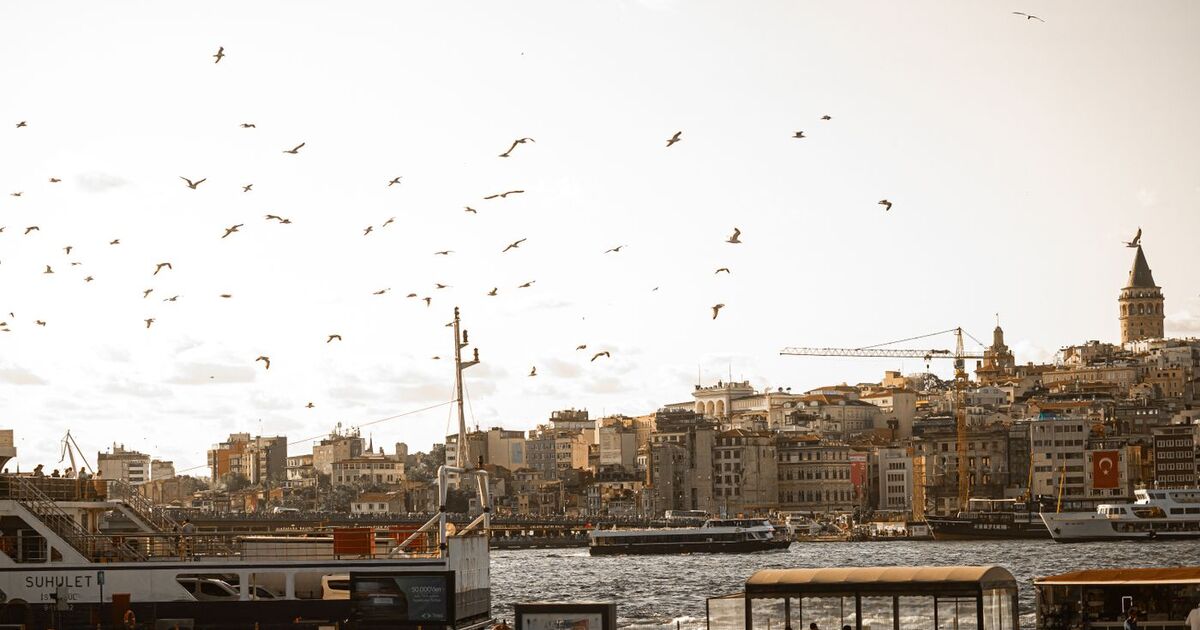
Despite political rivalries, Turkish and Greek cultures are remarkably similar, sharing collectivist values and a profound need for certainty. Greece's Uncertainty Avoidance score of 100 is the highest in the world, with Turkey's 85 close behind, revealing a shared soul that despises ambiguity.
By the Numbers: Decoding the Turkish vs. Greek Lifestyle
Forget the impassioned rhetoric and let's get down to brass tacks. The data paints a picture of two peoples joined at the hip, hustling hard in a world they don't fully trust. Let's start with work ethic. Stereotypes might suggest long siestas, but Greeks actually work some of the longest hours in the developed world, clocking in 1886 hours per year, slightly more than the Turks at 1832 hours (OECD, 2023). That's a lot of coffee, whether you call it Ελληνικός or Türk kahvesi.
Economically, there's a clear gap. Greece, as a long-standing EU member, has a GDP per capita of $22,440, while Turkey's is $13,110 (World Bank, 2023). This translates to different life outcomes, with Greek life expectancy at a robust 80.7 years compared to Turkey's 76 years (World Bank, 2023). However, look closer and the family portrait starts to align. Both societies exhibit startlingly low levels of social trust. According to the World Values Survey, only 15% of Greeks and a mere 11.6% of Turks believe 'most people can be trusted' (WVS, 2022). This breeds a reliance on close-knit family and friends, a world where your cousin's word is worth more than a signed contract.
Inequality is also a shared story, though more pronounced in Turkey, which has a Gini index of 41.9, indicating higher income disparity than Greece's 33.1 (World Bank, 2021-2022). Both are highly urbanized nations, with 77% of Turks living in cities (World Bank, 2023), a trend mirrored in Greece. This data doesn't show ancient enemies; it shows two developing, urbanizing, hard-working, and somewhat cynical societies staring at each other across the Aegean.
| Metric | Turkey | Greece |
|---|---|---|
| Avg. Annual Hours Worked | 1832 | 1886 |
| GDP Per Capita (USD) | $13,110 | $22,440 |
| Life Expectancy (Years) | 76 | 80.7 |
| % Who Trust Others | 11.6% | 15% |
Same Empire, Different Memories: How History Forged Two Identities
To understand the Greek-Turkish dynamic, you have to rewind past the 20th-century shouting matches and into the quiet, sprawling halls of the Ottoman Empire. For nearly 400 years, Greeks were one of the most significant non-Muslim populations within this vast Turkish-led empire. This wasn't a simple story of oppressor and oppressed; it was a complex symbiosis. Greeks were administrators, merchants, and sailors, while Turkish culture, administration, and language shaped the entire region. This long cohabitation baked a shared culture into the very soul of the Balkans and Anatolia. The food, the music with its mournful strings, the gestures, the fatalistic sighs—they all stem from this shared imperial past.
The messy divorce began in 1821 with the Greek War of Independence, a bloody, decade-long struggle that birthed the modern Greek state and framed the 'Turk' as the ultimate 'other'. This narrative was cemented a century later with the Greco-Turkish War (1919-1922) and the subsequent, traumatic 1923 population exchange. This event saw roughly 1.5 million Orthodox Christians expelled from Turkey and 500,000 Muslims expelled from Greece. It was a brutal act of nation-building, designed to create ethnically 'pure' states. While it ended centuries of coexistence, it couldn't erase the cultural DNA. The conflict created the political border, but the cultural border remains blurry and porous to this day.
Family, Honor, and Coffee: The Unspoken Social Codes of the Aegean
If you want to find the Turkish-Greek common ground, skip the parliament and head to a family dinner table. Or a coffee shop. In both places, you'll witness the same sociological software running on different hardware. The core processor is collectivism. Both societies score incredibly low on Individualism in Geert Hofstede's cultural framework, with Greece at 35 and Turkey at 37. This means identity is defined by the group—primarily the family—not the self. Loyalty is fierce and nepotism is often seen not as corruption, but as taking care of your own.
This collectivism explains the low social trust scores we saw earlier. Trust is a resource reserved for the 'in-group'. Strangers and state institutions are viewed with suspicion. This is where concepts of honor come into play. The famous Greek concept of 'philotimo' (a complex mix of dignity, honor, and duty) has a powerful parallel in the Turkish concept of 'namus'. Both are social currencies that govern behavior, ensuring you uphold the reputation of your family and community. Hospitality is another shared pillar. A guest in a Greek or Turkish home is treated with a level of generosity that can be overwhelming to outsiders, a sacred duty rooted in ancient traditions. The public square, or 'plateia' in Greek and 'meydan' in Turkish, often anchored by the local coffeehouse, remains the central stage for social life, particularly for men, where business is done, politics are debated, and life is observed over countless tiny cups of thick, strong coffee.
'Ancient Enemies' Trope: Why Your Grandfather's Nationalism is Out of Date
The most pervasive myth is that of the 'ancient enemies,' a timeless blood feud stretching back centuries. This is, to put it bluntly, a 19th-century marketing campaign. For most of history, identities in the Ottoman Empire were defined by religion, not nationality. You were an Orthodox Christian (a 'Rum') or a Muslim, not necessarily a 'Greek' or a 'Turk' in the modern political sense. The nationalist movements of the 1800s, inspired by Western European ideas, retroactively painted history as a continuous struggle between two distinct peoples, ignoring the long periods of coexistence, cooperation, and cultural fusion.
Then there's the 'food fight.' Is it Turkish coffee or Greek coffee? Is it baklava or μπακλαβάς? Tzatziki or cacık? The answer is: it's Ottoman. These are the culinary relics of a multi-ethnic empire, not the exclusive intellectual property of one nation-state. Arguing over their origin is like two siblings fighting over who 'invented' their grandmother's recipe. The modern reality often transcends this political posturing. Look no further than the 'earthquake diplomacy' of 1999, when a devastating earthquake hit Turkey, followed by one in Athens. The spontaneous outpouring of aid and support from ordinary citizens on both sides cut through decades of political tension, revealing a deep, shared humanity. This spirit shows that the people-to-people connection is often far warmer than the state-to-state relationship.
The Hofstede Blueprint: Decoding the Anxious, Hierarchical Aegean Soul
If you want the skeleton key to the Greek and Turkish psyche, look at the cultural framework developed by social psychologist Geert Hofstede. The numbers are so close, it's almost uncanny. Both cultures are hierarchical, accepting of inequality in power (Power Distance Index: Turkey 66, Greece 60). This manifests as a deep respect for age and status; you don't challenge the patriarch, the professor, or the boss publicly. As we've seen, they are also highly collectivist (Individualism: TR 37, GR 35), prioritizing group harmony over individual expression.
But the real headline is Uncertainty Avoidance (UAI). This dimension measures a society's tolerance for ambiguity. And here, both cultures are off the charts. Turkey scores a very high 85. Greece scores a perfect 100—the highest score in the entire world. This is the big one. It explains the love of bureaucracy, the obsession with rules (even while creatively bending them), the high levels of anxiety about the future, and the need for life to be predictable. It fuels a passion for ideology and a belief in absolute truths. This shared cultural trait makes both societies seem rigid and fatalistic to outsiders, yet it provides a comforting structure in a historically volatile region. When you combine high UAI with high Power Distance, you get societies that crave strong leaders who can provide a sense of certainty and order. The similarities in Long-Term Orientation (TR 46, GR 45) and Indulgence (TR 49, GR 50) are also striking, painting a portrait of two cultures that are pragmatic and moderately restrained. They're not just neighbors; they're cultural doppelgängers.
️ TikTok, Tourism, and Tensions: The Greek-Turkish Relationship Today
The 21st-century relationship between Greece and Turkey is a study in contrasts. On one hand, you have the grim-faced politicians and generals. Tensions flare periodically over maritime borders in the Aegean, drilling rights for natural gas, the divided island of Cyprus, and military buildups. Turkey's military spending stood at 1.6% of its GDP in 2023 (SIPRI), a figure that fuels a regional arms race and keeps diplomats on edge. This is the reality you see on the news: two NATO 'allies' locked in a perpetual strategic chess match.
But switch from CNN to TikTok, and you see a completely different world. Young Greeks and Turks use the same slang, dance to the same viral songs, and vacation on each other's islands (economic crises permitting). There's a massive, often unacknowledged, cultural import-export business happening 24/7. Turkish television dramas, or 'dizi', are ratings blockbusters on Greek television, with Turkish actors becoming household names in Athens. Head to a seaside taverna in İzmir, and you're as likely to hear a Greek pop song as a Turkish one. This cultural gravity pulls the two peoples together, even as politics tries to pry them apart. The modern reality is a paradox: the hardware of the state is geared for conflict, but the software of the people is increasingly synced. For many under 30, the old nationalist grievances are boring tales from a bygone era, less relevant than the price of a flight to Mykonos or a concert in Istanbul.
Frequently Asked Questions
Yes, very often. Both populations are part of the broader Eastern Mediterranean gene pool. Centuries of coexistence and intermingling under the Byzantine and Ottoman Empires mean there is significant shared ancestry. Physical appearance is regional, not national.
They are incredibly similar due to a shared Ottoman culinary heritage. Dishes like baklava, tzatziki (cacık), stuffed grape leaves (dolma/dolmades), and kebabs are common to both, often with minor variations and different names. It's best described as a shared regional cuisine.
Modern tensions primarily stem from unresolved issues following the collapse of the Ottoman Empire. Key disputes include sovereignty rights over islands and maritime borders in the Aegean Sea, natural gas exploration rights, and the long-standing division of Cyprus.
No, the languages are from completely different families. Turkish is a Turkic language, while Greek is a Hellenic language and part of the Indo-European family. They are not mutually intelligible, despite both having many loanwords from each other.
The most fundamental difference is religion, with the vast majority of Greeks being Orthodox Christians and Turks being Muslims. This shapes different holidays, social customs, and historical perspectives. However, as the data shows, the underlying cultural operating systems are remarkably similar.
On a person-to-person level, yes, overwhelmingly so. Tourists in both countries are often surprised by the warmth and hospitality they receive. Many families have shared histories. The political antagonism rarely reflects the reality of everyday interactions between individuals.