Why Do Pakistanis Go All Out for Guests? Unpacking the Cultural Code of Hospitality
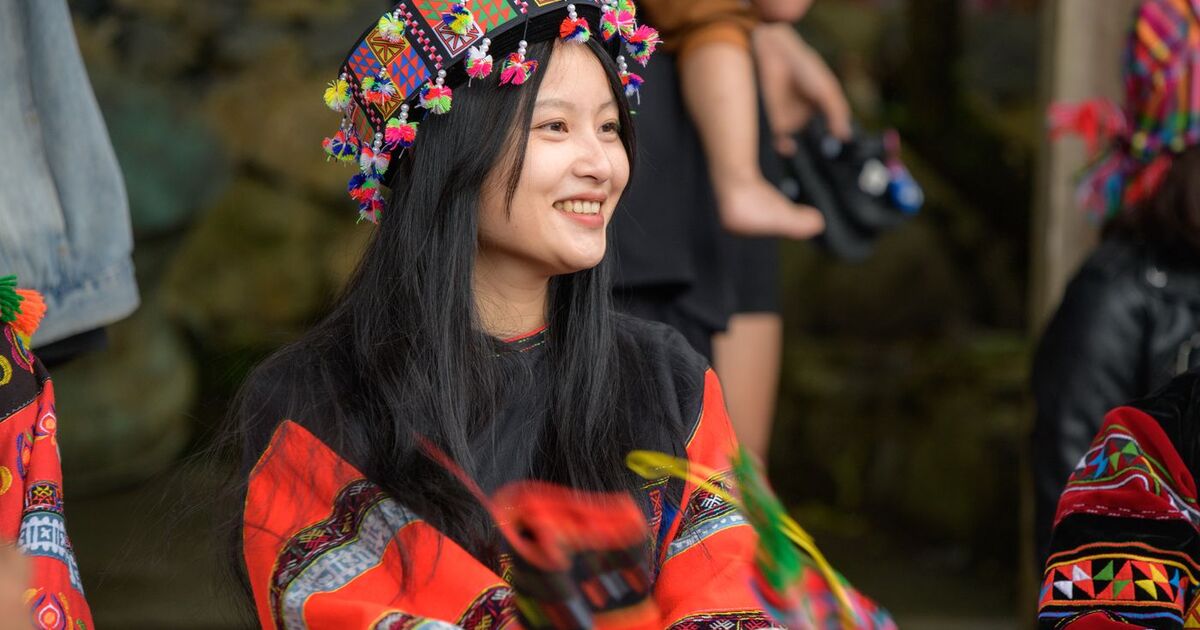
Pakistanis are renowned for their hospitality primarily due to deeply ingrained **collectivistic values** (Hofstede IDV of 14), where group harmony and honor dictate treatment of guests. This is reinforced by a strong emphasis on family reputation (*izzat*) and religious injunctions, transforming hospitality into a cornerstone of social life.
Decoding Pakistani Hospitality: The Data Dive
When you ask, "Why are Pakistanis so hospitable?" you're touching on a cultural phenomenon that’s more than just being 'nice.' It’s a complex tapestry woven from historical threads and deeply ingrained societal norms. While specific global metrics for 'hospitality levels' don't exactly exist (imagine trying to quantify a warm welcome!), we can lean on powerful cultural frameworks to decode the underlying mechanics.
Enter Hofstede Insights, a leading authority on national cultures. Their research provides crucial dimensions that paint a telling picture. For Pakistan (PK), the Individualism (IDV) score stands strikingly low at 14. To put that in perspective, the global average is around 60. This isn't just a number; it's a flashing neon sign pointing to a profoundly collectivistic society. In such cultures, group identity, loyalty, and the welfare of the 'in-group' (which extends to welcomed guests) take precedence over individual desires. Your actions reflect on your family, your community, your village, and even your nation. Being a gracious host isn't just personal preference; it's a social obligation, a performative act that upholds collective honor (Hofstede Insights, 2023).
Another key dimension for Pakistan is Uncertainty Avoidance (UAI), scoring a relatively high 70. High UAI societies typically have a low tolerance for ambiguity and ambiguity, leading to a need for rules, structured environments, and predictable social rituals. Hospitality, in this context, becomes a highly ritualized and structured way to manage the 'uncertainty' of a guest – someone from outside the immediate social circle. By providing lavish comfort, clear expectations (for both host and guest), and structured interaction, the inherent uncertainty of a stranger's presence is meticulously managed and transformed into a predictable, positive experience for everyone involved (Hofstede Insights, 2023).
| Dimension | Score (PK) |
|---|---|
| Power Distance (PDI) | 55 |
| Individualism (IDV) | 14 |
| Masculinity (MAS) | 50 |
| Uncertainty Avoidance (UAI) | 70 |
| Long-Term Orientation (LTO) | 50 |
| Indulgence (IVR) | 0 |
Ancient Echoes: The Historical Roots of Pakistani Generosity
Pakistan's current hospitality isn't a new phenomenon; it's a continuation of traditions stretching back millennia, deeply etched into the region's historical narrative. The land that is now Pakistan sits at a crossroads of ancient civilizations, trade routes, and nomadic movements. From the sophisticated urban planning of the Indus Valley Civilization (dating back to 2500 BCE) to the bustling caravan routes of the Silk Road, welcoming strangers was not just a courtesy; it was a matter of survival, diplomacy, and commerce.
Historically, in societies where state infrastructure was limited or nonexistent, travelers relied heavily on the goodwill of local communities. Hospitality, or *mehman nawazi* (guest hospitality) as it is known in Urdu, became a vital social contract. Providing food, shelter, and protection to a guest was a sacred duty, especially in arid or mountainous regions where journeys were perilous. This tradition was further codified and elevated with the arrival of Islam in the 8th century. Islamic teachings place immense emphasis on the rights of the guest, often viewing them as a blessing from Allah. The Prophet Muhammad (peace be upon him) himself stressed the importance of treating guests with generosity, making it a virtuous act of faith (Al-Ghazali, 11th Century).
Even the tribal structures prevalent across much of the region reinforced this. In a tribal society, one's honor (*izzat*) is paramount. Treating a guest poorly would not only bring shame upon the individual but also upon their entire family and clan. Conversely, lavish hospitality enhanced one's standing. These ancient codes, whether rooted in pre-Islamic tribal customs, the practicalities of trade, or the spiritual tenets of Islam, have coalesced over centuries to create a deeply ingrained cultural expectation of generosity towards visitors. This isn't just history; it's the cultural DNA that continues to inform modern Pakistani interactions with guests (Ahmed, 2002).
Social Fabric: The Sociological Underpinnings of Pakistani Hospitality
Alright, let’s get down to the brass tacks of *why* this isn't just historical relic but a living, breathing social force. At its core, Pakistani hospitality is a direct manifestation of its highly collectivistic societal structure (remember that Hofstede IDV score of 14?). In such a setup, individual identity is inextricably linked to the group – the family, the extended kin, the biradari (community), and even the village. Your behavior reflects directly on these units.
This is where the concept of *izzat*, or honor/reputation, becomes a sociological superpower. Extending generous hospitality to a guest isn't merely a kind gesture; it's a public performance of honor, a demonstration of social standing, and a reinforcement of family values. A host who fails to provide adequately for a guest risks bringing shame upon their household. Conversely, a host who goes above and beyond garners respect and enhances their social capital. Guests are often seen as a *barkat* (blessing), a conduit through which divine favor can enter the home.
The family unit is the primary engine of this system. Decisions are often made collectively, and resources are pooled. When a guest arrives, the entire family often mobilizes to ensure their comfort, from the eldest patriarch to the youngest child helping serve. This isn't just about sharing a meal; it's about sharing your life, your home, and your time. It’s a powerful bonding mechanism, not just between host and guest, but also within the hosting family, as they collectively uphold their social duties. The guest, in turn, is expected to reciprocate with respect and appreciation, further reinforcing these delicate social bonds (Zaidi, 2011).
Busting Myths: What People Misunderstand About Pakistani Hospitality
When foreigners encounter Pakistani hospitality, the initial reaction is often awe and gratitude. But let’s get real: it’s not always the simple, straightforward 'niceness' it appears to be. There are layers to this onion, and peeling them back reveals some fascinating complexities that often get overlooked.
One common misconception is that it's purely altruistic. While genuine warmth is undoubtedly present, under the surface, there's a strong element of social obligation and expectation. This isn't necessarily a bad thing, but it means refusing a host's offer can sometimes be seen as an insult, not just a preference. The host's *izzat* (honor) is tied to their ability to provide, and declining their efforts can diminish that. It’s a dance of unspoken rules, and outsiders might accidentally step on a few toes.
Another error is assuming uniformity. While the *spirit* of hospitality is pervasive, its *expression* varies wildly. Urban hospitality, for instance, might involve taking guests to lavish restaurants or ordering in, rather than only home-cooked meals, reflecting modern lifestyles and smaller living spaces. Rural hospitality, often tied to more traditional agricultural or tribal communities, can be even more intensive and less formal, with guests being integrated into daily life more directly. Economic status also plays a role; while everyone strives for generosity, what that looks like in a modest home versus an affluent one can differ significantly.
Finally, some misunderstand the intensity. For a Westerner used to more individualistic norms, the constant attention, the relentless offering of food, and the insistence on providing every comfort can feel overwhelming. It’s not meant to be suffocating; it’s an expression of care and honor. But for those unfamiliar with such high-context communication, it can be a lot to navigate. It's less about your personal comfort and more about the host's duty and honor (Jafri & Ahmad, 2018).
Connecting the Dots: Pakistani Hospitality in Global Cultural Patterns
Now, let's zoom out and see where Pakistan's unique brand of hospitality fits into the global cultural mosaic. As we saw, Pakistan scores a measly 14 on Individualism (IDV) and a robust 70 on Uncertainty Avoidance (UAI) according to Hofstede. These aren't just arbitrary numbers; they are powerful predictors of social behavior, and they place Pakistan squarely within a fascinating global pattern of 'Mediterranean' or 'collectivistic honor' cultures.
Think about it: many cultures around the Mediterranean basin, the Middle East, and parts of Latin America exhibit similar characteristics. They are often highly collectivistic, prioritize family honor, and display intense hospitality. Why? Because in high UAI societies, there's a strong preference for established norms and rituals to manage the unknown. A guest, by definition, introduces an element of the unknown. Hospitality, therefore, becomes a highly ritualized, rule-bound framework for turning potential uncertainty into a predictable, positive social interaction. It's a structured way to integrate the 'other' without disrupting social harmony (Hofstede Insights, 2023).
The low IDV reinforces this. In collectivistic cultures, the well-being of the group is paramount. Extending warmth and care to a guest isn't just about individual goodwill; it's an extension of the in-group's duty to protect and provide, reflecting positively on the entire collective. The 'Mediterranean values' tag, often associated with strong family ties, social honor, and lavish welcoming of guests, finds a perfect resonance in Pakistan. Researchers like Richard Lewis (Lewis Model of Culture) also highlight how 'multi-active' cultures, common in these regions, are characterized by prioritizing relationships and human interaction over rigid schedules, making spontaneous and generous hospitality a natural outflow of their social style. This isn't an isolated quirk; it's a deeply patterned behavior seen across a broad swathe of the world (Lewis, 2006).
️ From Village to Megacity: The Modern Reality of Pakistani Hospitality Today
So, we’ve covered the data, dug into history, and dissected the sociological underpinnings. But what does Pakistani hospitality look like in the 21st century? Is it a fading tradition in the face of rapid urbanization, economic pressures, and globalization? Short answer: not really, but it's certainly adapting.
While the core values remain steadfast, the *expression* of hospitality is evolving. In sprawling megacities like Karachi or Lahore, where apartments are smaller and lives are busier, the grand multi-day home stays of rural tradition might be less common. Instead, hospitality might manifest as insistence on treating guests to lavish meals at upscale restaurants, generous gift-giving, or ensuring transportation and sightseeing are meticulously arranged. The intent – to honor and make the guest feel cherished – remains, but the medium changes. Social media, surprisingly, also plays a role. People might use platforms to connect with distant relatives or friends, leading to renewed invitations and opportunities for hosting (The Dawn, 2019).
Despite the undeniable challenges of modern life – increasing costs of living, smaller family units, and the influence of more individualistic global cultures – the ethos of *mehman nawazi* remains a powerful source of national pride. Pakistanis often take immense pride in their country’s reputation for warmth and generosity, and visitors frequently cite this hospitality as one of their most memorable experiences. It serves as a cultural anchor, a reminder of shared values, and a testament to a society that, despite its complexities, still places immense value on human connection. It's a dynamic, living tradition, not a museum piece (Khan, 2017).
Frequently Asked Questions
Pakistanis are remarkably welcoming to strangers due to a potent mix of deeply ingrained collectivistic values, the cultural imperative of 'izzat' (honor), and Islamic teachings that emphasize generosity towards guests. Strangers are often seen as blessings, and treating them well brings honor to the host and their family.
Islam profoundly influences Pakistani hospitality, making it a virtuous and religiously sanctioned act. The Prophet Muhammad (peace be upon him) and the Quran emphasize the importance of treating guests with kindness and generosity, often seeing them as a means of earning divine reward. This spiritual dimension elevates hospitality beyond mere social custom.
While the spirit of hospitality is pervasive, its expression can vary. Differences exist between urban and rural settings, across socioeconomic classes, and even regionally. However, the underlying commitment to making a guest feel honored is a common thread that runs through most Pakistani interactions.
Yes, often. Refusing food or gifts too quickly or emphatically can be perceived as an insult, as it may imply the host's offerings are not good enough, or that you are rejecting their efforts to show respect and honor. It's usually best to accept with gratitude, even if you only take a small portion.
*Mehman Nawazi* is the Urdu/Persian term for guest hospitality. It encompasses the entire cultural practice of generously welcoming, hosting, and caring for guests, often going to great lengths to ensure their comfort and pleasure. It signifies a profound cultural duty and a source of personal and family honor.