The Philippines: A Cultural Cocktail Shaken by Three Empires, Not Stirred
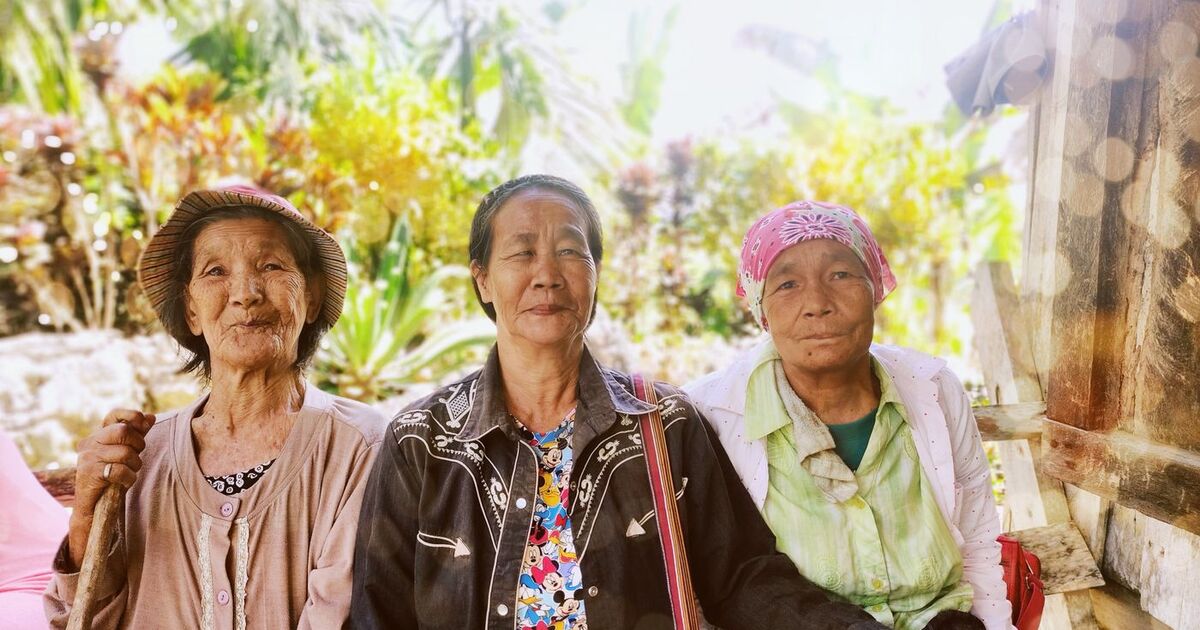
The Philippines was shaped by 333 years of Spanish Catholicism and feudalism, 48 years of American democratic ideals and consumerism, and a brief, brutal Japanese occupation. This triple-layered colonial history created a unique culture that is hierarchical yet collectivist, outwardly Western yet fundamentally Asian.
The Filipino Code: What the Numbers Say
Before we dive into centuries of history, let's look at the modern Filipino cultural source code. According to pioneering social psychologist Geert Hofstede's 6-D Model, the Philippines is a land of fascinating contradictions. The country scores a massive 94 on Power Distance (PDI), making it one of the most hierarchical societies in the world (Hofstede Insights, 2023). This isn't just a number; it's the cultural software behind the respect for elders shown through the 'mano po' gesture, the deference to authority figures, and the acceptance of unequal power distribution as a fact of life. Your boss isn't your friend; they're the boss.
But here's the twist. The Philippines scores a very low 32 on Individualism (IDV), flagging it as a deeply collectivist culture. This is the 'we' over 'me' mindset. Loyalty to the in-group, whether family or the local 'barkada' (clique), is paramount. This explains the power of family dynasties and the social safety net provided by extended relatives. This combination of high PDI and low IDV is potent: it creates a society where people accept their place in a rigid hierarchy, but their primary loyalty is to their immediate group, not necessarily to the state or abstract rules. The culture is also highly 'Masculine' (64), meaning it's driven by competition and success. Yet, it has a low score on Long-Term Orientation (27), suggesting a focus on the present and a cultural adaptability born from centuries of navigating uncertainty.
| Dimension | Philippines | Spain | USA | Japan |
|---|---|---|---|---|
| Power Distance (PDI) | 94 | 57 | 40 | 54 |
| Individualism (IDV) | 32 | 51 | 91 | 46 |
| Masculinity (MAS) | 64 | 42 | 62 | 95 |
| Uncertainty Avoidance (UAI) | 44 | 86 | 46 | 92 |
333 Years of the Cross and Sword: The Spanish Blueprint
To understand the Philippines' sky-high Power Distance score, you need to look at the 333 years of Spanish rule that began in 1565. Spain didn't just bring Catholicism; it brought a medieval, feudal European social structure and imposed it on a diverse collection of pre-colonial societies. The Spanish Crown established the 'encomienda' system, a brutal land grant model that gave Spanish colonists control over vast territories and the indigenous people living there. This created a permanent, landed aristocracy and a dependent, landless peasantry, baking social inequality into the very foundation of the nation (Corpuz, 2007). This is the historical root of that PDI score of 94.
The Catholic Church was Spain's co-pilot in this project. It became the most powerful institution in the archipelago, controlling not just spiritual life but also education, politics, and vast tracts of land. The parish priest was often the sole representative of Spanish authority in a town, a figure of immense power. This cemented a top-down structure where authority, both secular and divine, was unquestionable. This era also gave the Philippines its name (after King Philip II), its religion, and, crucially, a shared sense of identity that began to form in opposition to the Spanish colonizers, a sentiment later articulated by nationalist heroes like José Rizal.
Hollywood and Habeas Corpus: The American Overhaul
After the Spanish-American War in 1898, the Philippines was sold to the United States for $20 million. The U.S. began its colonial project under the banner of 'benevolent assimilation,' a stark contrast to the Spanish approach. Instead of feudalism and catechism, the Americans brought mass public education, democratic institutions, and Protestant-ethic capitalism. Their most impactful tool was the English language, implemented nationwide through the public school system with teachers known as 'Thomasites'. This single policy created a new avenue for social mobility that bypassed the old Spanish-era land-based elite (Agoncillo, 1990). Suddenly, proficiency in English and an American-style education could get you a job in the new colonial bureaucracy or a ticket to study in the U.S.
This American layer created a fascinating cultural tension that defines modern Filipino society. It introduced the ideals of individualism, meritocracy, and democracy into one of the world's most hierarchical and collectivist cultures. This created a hybrid system where a family's name and connections (the Spanish legacy) still matter immensely, but the 'American dream' of individual success is also a powerful aspiration. The U.S. also imported its consumer culture wholesale: Hollywood movies, popular music, brand names, and basketball became deeply embedded in the Filipino psyche. This half-century of American rule left the Philippines with a political system modeled on Washington D.C. and a cultural heart that often looks towards Los Angeles.
Misconceptions About Filipino Identity: It's Not a Cultural Carbon Copy
A common, lazy take is that Filipino culture is just a derivative, a sort of 'Asian Latino' or 'America's little brown brother'. This completely misses the point. Filipino culture is a masterclass in syncretism, the process of blending and adapting foreign influences into something entirely new. It's not passive imitation; it's active appropriation and reinvention. Take the famous Filipino hospitality. It's not just about being 'nice' in the Western sense. It's an intricate social system tied to pre-colonial concepts like 'pakikisama' (getting along) and 'utang na loob' (a debt of gratitude), which are about maintaining group harmony and managing social obligations (Rafael, 1988). When a Filipino family offers you, a near-stranger, the best food in their house, they are not just being kind; they are engaging in a deeply rooted cultural practice of social investment and face-saving.
The ultimate symbol of this is the Jeepney. It began as a surplus U.S. military jeep left behind after World War II. A purely American object. But Filipinos didn't just use it; they remixed it. They stretched its frame, added benches to make it a communal vehicle, and covered it in vibrant, chaotic, and flamboyant decorations often featuring Catholic iconography. It's an American military machine, decorated with Spanish religious symbols, used for a collectivist Filipino purpose. It is a perfect metaphor for the culture itself: not a copy of anything, but a unique, resourceful, and creative hybrid forged from the materials left behind by empires.
The Colonial Hangover: A Global Cultural Pattern
The Filipino cultural profile isn't an anomaly; it fits a broader global pattern observed in many post-colonial nations. Its combination of extremely high Power Distance (94) and low Individualism (32) is a classic signature of societies shaped by Spanish colonialism. Look at Latin America: countries like Mexico (PDI 81, IDV 30) and Colombia (PDI 67, IDV 13) show a similar pattern, a legacy of the same feudal 'encomienda' system and centralized Catholic authority. As Hofstede's research points out, empires leave a cultural footprint. The Roman Empire's hierarchical structure influenced Spain, which in turn exported that model to its colonies.
Where the Philippines breaks the mold is in its other cultural dimensions, largely due to the American influence. Its Uncertainty Avoidance score is remarkably low at 44. This is a stark contrast to Spain (86) and Japan (92), and even lower than the U.S. (46). This low score indicates a high tolerance for ambiguity, improvisation, and a willingness to 'go with the flow'. This is the cultural manifestation of 'bahala na'—a uniquely Filipino attitude often misinterpreted as fatalism, but which is actually a form of adaptive coping and trust in a higher power or fate. It's a psychological tool essential for a nation that has had to navigate centuries of shifting loyalties, languages, and colonial masters. This adaptability is the secret ingredient in the Filipino cultural cocktail.
The Third Shadow: Japan and Today's Filipino Identity
You cannot fully understand modern Filipino identity without acknowledging the third, and most brutal, colonial power: Imperial Japan. The Japanese occupation during World War II lasted only three years (1942-1945), but its psychological impact was immense. It was a violent rupture that shattered the myth of American protection and invincibility. For the first time in centuries, the Philippines was cut off from the West and subjected to the rule of a fellow Asian power under the guise of an 'Asia for Asiatics' co-prosperity sphere. The brutality of the occupation, however, dispelled any notions of brotherly liberation and fostered a fierce, localized guerrilla resistance.
This traumatic period forced a sense of self-reliance that was different from the anti-colonial intellectualism of the Spanish era. It was a nationalism forged in survival. Today, this legacy complicates the Philippines' relationship with the world. It fuels a lingering distrust of foreign military presence while also underscoring its strategic importance in Asia. The colonial legacies are now a tangled web in modern life. Political dynasties trace their roots to the Spanish-era elite. The legal system, corporate culture, and the widespread use of English for business are American inheritances (World Bank, 2022). The national obsession with basketball is a direct American import, while the deep-seated Catholicism is a Spanish one. Into this mix, a new wave of cultural influence from South Korea (K-Pop) and Japan (anime) now competes for the attention of Filipino youth, showing that the process of cultural layering never truly stops.
Frequently Asked Questions
The Americanization of the Philippines stems from the 48-year U.S. colonial period (1898-1946), which introduced mass public education in English, a democratic form of government, U.S. legal systems, and a deep infusion of American pop culture like movies, music, and sports, especially basketball.
No. While Spanish was the language of government and education for over 300 years, its use dramatically declined after the U.S. made English the language of instruction. Today, less than 1% of the population speaks it fluently, though thousands of Spanish words are integrated into Filipino languages like Tagalog.
Spanish colonization profoundly influenced Filipino cuisine, introducing ingredients like tomatoes, potatoes, and onions, as well as cooking techniques like sautéing ('guisado'). Many popular festive dishes have Spanish roots, such as 'lechon' (roast pig), 'adobo' (which uses vinegar and soy sauce instead of the Spanish original), 'paella', and 'caldereta'.
Geographically, the Philippines is in Southeast Asia, and Filipinos are ethnically Southeast Asian (part of the Austronesian language family). However, due to centuries of Spanish and American colonial influence, many Filipinos share cultural similarities with both Latino and Western cultures, creating a unique identity that is Asian but with deep, undeniable ties to the West.
It's a tie between Spain's religious and social structure and America's linguistic and political systems. The Roman Catholic faith and the hierarchical, family-centric social norms are Spanish legacies. The widespread use of English, the democratic government, and the love for consumer culture are American legacies. Both are fundamental to understanding the modern Philippines.