So, Why Are Egyptians Insanely Hospitable? We Dug Into the Data.
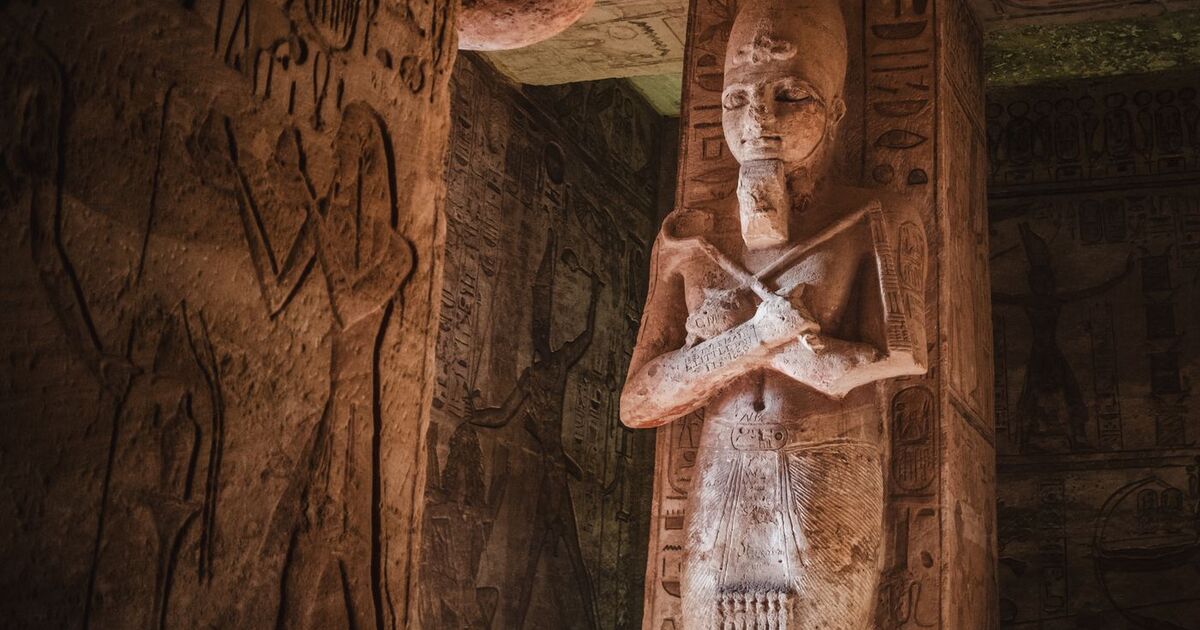
Egyptian hospitality is a cultural script written by history, religion, and a deeply collectivist society. With an Individualism score of just 25 out of 100, group identity and family honor are paramount. Generosity isn't just a choice; it's a social obligation that signals your standing in the community.
By the Numbers: What the Data Says About Egyptian Hospitality
Let's cut through the clichés. To understand Egyptian hospitality, we need to look at the cultural source code. According to the foundational work of Geert Hofstede, a pioneer in cross-cultural psychology, cultures can be measured along six key dimensions. For Egypt, the numbers tell a fascinating story. The most glaring statistic is the country's rock-bottom Individualism (IDV) score of just 25. This indicates a highly collectivist society, where the group (family, community) takes precedence over the individual. People think in terms of 'we,' not 'I.' This is the bedrock of hospitality; your guest is the group's guest, and your generosity reflects on everyone you're connected to.
Then there's Power Distance (PDI), which sits high at 70. This dimension reflects the degree to which less powerful members of a society accept and expect that power is distributed unequally. In practice, this translates to a deep respect for hierarchy, age, and status. The host is in a position of authority and honor, and the guest's role is to accept their generosity gracefully. Finally, a sky-high Uncertainty Avoidance (UAI) score of 80 shows a culture that values structure, rules, and predictability. The ancient, ritualized customs of hosting and being a guest provide a comfortable, predictable framework for social interaction, reducing the anxiety of dealing with strangers. It’s a script everyone knows by heart.
| Dimension | Score (0-100) |
|---|---|
| Power Distance (PDI) | 70 |
| Individualism (IDV) | 25 |
| Masculinity (MAS) | 45 |
| Uncertainty Avoidance (UAI) | 80 |
| Long-Term Orientation (LTO) | 7 |
| Indulgence (IVR) | 4 |
From Pharaohs to Fatimids: The Historical Roots of Egyptian Generosity
Egyptian hospitality isn't a modern invention; it's etched into millennia of history. In Pharaonic times, the concept of Ma'at—divine order, truth, and justice—obligated people to care for the vulnerable, including travelers. Ancient texts like the 'Instructions of Kagemni' advise on proper conduct, including sharing one's food with the hungry. Hospitality was a cosmic duty, a way to maintain balance in the universe. Geography played a huge role too. The Nile was a lifeline, but the vast, surrounding desert was a death trap. For desert communities, offering water and shelter to a stranger wasn't just kind; it was the difference between life and death. The norm of hospitality became a survival pact, a system of mutual aid hardwired into the culture.
Later, both Christianity and Islam reinforced these ancient traditions. Coptic monasteries became legendary centers of hospitality, offering refuge to pilgrims traveling through harsh landscapes. With the arrival of Islam in the 7th century, the concept of karam (generosity and honor) became central. Islamic teachings frame the guest as a blessing from God, and providing for them is a sacred duty that earns divine rewards. The Prophet Muhammad is often quoted as saying, 'Whoever believes in Allah and the Last Day, let him honor his guest.' This powerful religious framework layered on top of Pharaonic duties and desert survival logic, cementing hospitality as a cornerstone of Egyptian identity.
It Takes a Village: Why Family, Honor, and Community Fuel Egyptian Hospitality
In Egypt, an individual's actions are rarely just their own. They reflect on the entire family. This is the essence of a collectivist culture. The key concepts to grasp here are sharaf (honor) and 'eib (shame). A family's sharaf is its most valuable social asset, and generosity is one of the primary ways it's displayed and maintained. When an Egyptian invites you into their home, they are performing a public act that demonstrates their family's standing, their capacity to provide, and their adherence to cultural ideals. Lavishly feeding a guest, even if it stretches their budget, enhances their reputation (sum'a). Conversely, being seen as stingy or inhospitable would bring immense 'eib upon the entire family, a social stain that can be difficult to remove.
This dynamic makes hospitality less a spontaneous act of kindness and more of a deeply ingrained social performance. As sociologist Frank Henderson Stewart notes in his work on Bedouin honor, generosity is a competitive field where status is won or lost. The guest becomes an audience to a display of the family's virtue. The phrase 'el beit beitak' ('my house is your house') is more than a pleasantry; it's a declaration that you are temporarily being brought into the family's inner circle, a space governed by their honor code. The pressure to uphold this code is immense, as community opinion acts as a powerful regulator of social behavior, far more potent than any formal law.
The Myth of 'Pure' Hospitality: What Tourists Often Misunderstand
Many travelers come back from Egypt with stories of overwhelming generosity, often framing it as a pure, selfless act. The reality is more complex. While genuine warmth is abundant, hospitality in any culture is a form of social exchange, and Egypt is no exception. It is not always the altruistic, no-strings-attached gesture Westerners might assume it is. In many contexts, especially commercial ones, an offer of tea or a small gift can be a powerful tool of social engineering. It establishes a relationship and a sense of obligation, making it much harder for a tourist to say 'no' to a subsequent sales pitch. This isn't necessarily malicious; it's applying a cultural script of reciprocity to a commercial context.
Even in non-commercial settings, there is an expectation of reciprocity, though it may be indirect. The 'payment' is not money, but social currency: respect, praise, and enhancing the host's reputation within their community. A good guest knows to praise the food, the home, and the host's generosity, both to their face and to others later. This feedback is vital to the honor system. Furthermore, the stereotype of universal hospitality can be misleading. A warm welcome in a rural village is a different social phenomenon than navigating the transactional dynamics of a Cairo bazaar or the reserved professionalism of a luxury hotel. Assuming every act of kindness is without context or expectation is to misunderstand the intricate social dance at play.
The Collectivist Blueprint: How Egypt's Hospitality Fits a Global Pattern
Egypt's hospitality isn't an isolated quirk; it's a classic expression of a well-documented cultural pattern found across the Mediterranean, the Middle East, and much of the Global South. The common thread is collectivism. Looking again at Hofstede's data, Egypt's Individualism score of 25 is similar to that of other Arab nations like Saudi Arabia (25) and Lebanon (38), and stands in stark contrast to the USA (91) or the UK (89). In collectivist cultures, group harmony and interdependence are core values. Hospitality is the ultimate tool for building and maintaining these social bonds. It’s how you vet strangers and turn them into allies, reinforcing the social safety net.
The high Power Distance (70) and high Uncertainty Avoidance (80) also fit the pattern. In cultures that are both hierarchical and anxious about the unknown, rigid social rituals provide comfort and clarity. The roles of 'host' and 'guest' are clearly defined, with specific obligations for each. The host provides and protects, while the guest accepts and shows deference. This structured interaction makes encounters with outsiders manageable and predictable. This cultural syndrome, described by researchers as an 'honor culture,' prizes reputation and social obligation above individual feelings or convenience. Therefore, the effusive Egyptian welcome is not an anomaly but a logical outcome of a cultural operating system that prioritizes the 'we' over the 'me' and favors scripted social harmony over ambiguity.
Cairo, Coffee, and Couchsurfing: Egyptian Hospitality in the 21st Century
So how does this ancient code of conduct fare in the age of urbanization and the internet? The picture is, unsurprisingly, complicated. In Egypt's megacities like Cairo and Alexandria, the anonymity of urban life can erode the tight-knit community structures that police the honor system. A neighbor you've never met is less likely to be invited in for a three-course meal than a fellow villager would be. Economic pressures also play a significant role. With high youth unemployment and inflation, the financial burden of traditional hospitality can be immense, leading to a tension between cultural expectations and economic reality.
This has led to the evolution of new social norms. One is the 'ezbet marakbiya' or the 'sailor's invitation': an offer made out of politeness with the full expectation that it will be politely declined. It fulfills the social requirement to offer without incurring the actual cost. At the same time, technology is creating new avenues for the tradition. Platforms like Couchsurfing and Airbnb Experiences are embraced by many young Egyptians as a modern way to perform the host role, share their culture, and connect with the world on their own terms. It’s a fascinating adaptation, blending an ancient impulse for hospitality with the tools of a globalized, digital world. The core value of honoring the guest persists, even if its expression is changing form.
Frequently Asked Questions
It can be, but it depends on the context. Declining a casual offer for tea is usually fine, but refusing a heartfelt invitation to a home meal can be taken as a slight. The best approach is to show immense gratitude, explain why you cannot accept (a prior commitment is a good reason), and express a strong desire to accept another time.
Yes, it's customary and highly recommended to bring a small gift when invited to someone's home. It doesn't need to be expensive. A box of pastries or chocolates is a classic and always welcome choice. It's a gesture of appreciation that acknowledges the effort of your host.
This is part of the honor culture. A host's honor is tied to their generosity, and ensuring a guest is full to bursting is a clear demonstration of that. Politely refusing once is expected (it shows you're not greedy), but they will insist. Accepting after the second or third offer is part of the social ritual.
Generally, you'll find more traditional, all-encompassing hospitality in rural villages where community ties are stronger and everyone knows each other. In large, anonymous cities like Cairo, while people are still friendly, interactions are often quicker and more transactional. Home invitations from strangers are less common in the city.
While the ideal is universal, in practice, social status, nationality, and context matter. Foreign tourists are often treated with a special level of hospitality, seen as representatives of their country. However, the nature of the interaction can differ based on gender, age, and perceived social class, reflecting Egypt's hierarchical social structure (PDI score of 70).