Why the Thai Smile Isn't Always What You Think It Is
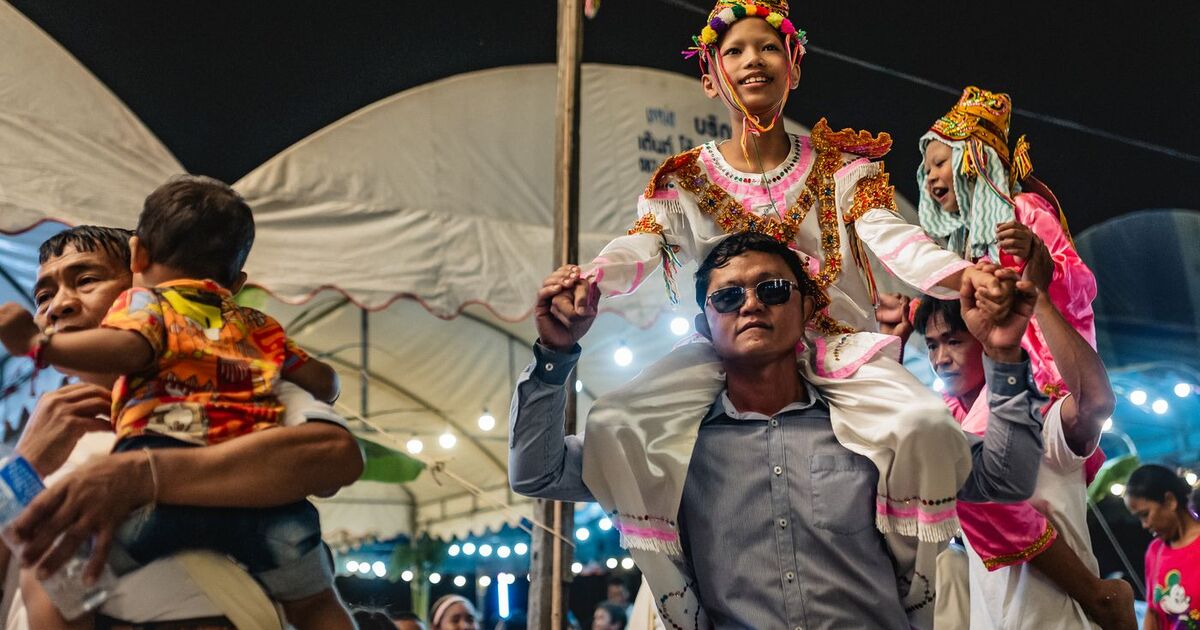
The famous Thai smile is far more than just a sign of happiness; it’s a sophisticated social tool rooted in collectivism and the pursuit of social harmony. With an Individualism score of just 20 on Hofstede's dimensions, Thais prioritize group cohesion, using smiles to navigate awkwardness, avoid confrontation, and save face.
The Data Doesn't Lie (Usually)
When we talk about cultural behavior, especially something as ubiquitous as the Thai smile, we’ve got to start with the cold, hard numbers. Forget the romantic travelogues for a sec; let's hit the data.
According to Hofstede Insights, Thailand scores a measly 20 on Individualism (IDV). That's practically off the charts for collectivism. This means individual expression often takes a backseat to group harmony and maintaining social cohesion. Compare that to, say, the US (IDV 91) and you start to see why our emotional poker faces might differ. They also score 64 on Power Distance (PDI), indicating a high acceptance of hierarchical structures, and 64 on Uncertainty Avoidance (UAI), suggesting a preference for clear rules and avoiding ambiguity. Oh, and a low 34 on Masculinity (MAS), which points towards a society valuing quality of life and consensus over assertiveness and competition (Hofstede Insights, 2023).
These numbers aren't just fascinating trivia; they're the foundational code for understanding why Thais operate the way they do – and why that smile is so incredibly prevalent.
| Dimension | Score |
|---|---|
| Power Distance Index (PDI) | 64 |
| Individualism (IDV) | 20 |
| Masculinity (MAS) | 34 |
| Uncertainty Avoidance Index (UAI) | 64 |
| Long Term Orientation (LTO) | 32 |
| Indulgence (IVR) | 45 |
A Smile Through Time
The Land of Smiles didn't just wake up one day and decide to grin collectively. This cultural characteristic has deep roots. Unlike many of its Southeast Asian neighbors, Thailand was never formally colonized by a Western power. This historical independence fostered a strong sense of national identity and resilience, often expressed through a collective 'mai pen rai' attitude, translating roughly to 'no worries' or 'it’s nothing' (Kamphiranon, 2018). It’s not just about shrugging off problems; it’s about maintaining emotional composure and fluidity in social interactions.
Buddhism, the dominant religion, also plays a profound role. Principles of equanimity, non-attachment, and the avoidance of extreme emotions are central to Buddhist thought. A calm, smiling demeanor can be seen as an outward manifestation of inner peace and a way to navigate life's challenges without causing ripples. This historical cocktail of independence and spiritual influence has brewed a culture where the smile acts as both a shield and a bridge.
The Social Glue of Grins
Here’s where the data meets human behavior. Remember Thailand’s ridiculously low Individualism score (IDV 20)? That's your golden ticket to understanding the social function of the smile. Thailand is a prime example of a 'shame-culture' where the fear of losing face, both for oneself and others, dictates much social interaction. This is intrinsically linked to collectivism and the paramount importance of 'social-harmony' (Kamphiranon, 2018).
The smile, therefore, becomes an essential social lubricant. It's used to avoid confrontation, to soften a refusal, to show respect, to acknowledge a blunder, to apologize, or even to mask embarrassment or discomfort (Scollon & Scollon, 2201). It’s an unspoken language of deference, known as 'kreng jai' – a deep consideration for others' feelings and not wanting to impose or cause inconvenience (Siam Society, 2000). The smile is the polite, non-verbal equivalent of saying, 'I recognize you, I respect you, and I want our interaction to be smooth and pleasant.' It’s the ultimate social multi-tool.
What You're Getting Wrong (It's Not Always What You Think)
The biggest misconception about the Thai smile? That it always signifies genuine joy or happiness. While a Thai person certainly smiles when they're happy (who doesn't?), the range of emotions it can convey is far broader and often surprising to Westerners. A smile can mean 'I’m sorry,' 'I’m embarrassed,' 'I don’t understand,' 'I feel awkward,' 'I’m trying to avoid an argument,' or even 'I’m actually quite annoyed but can’t show it directly' (Chambers, 2004).
Expecting every smile to be a pure reflection of inner bliss can lead to serious misinterpretations. Imagine someone smiling brightly after a minor accident; a Westerner might think they're unconcerned or even mocking. In reality, that smile is likely a complex maneuver to save face, express 'mai pen rai,' and signal that they don’t want to cause trouble or confrontation. It's a highly sophisticated form of non-verbal communication, not a simple mood indicator.
Beyond Bangkok: The Global Smile Pattern
The Thai smile, while iconic, isn't an isolated cultural quirk. It's part of a broader, fascinating cross-cultural pattern seen in many collectivist and shame-based societies. Think about the emphasis on harmony and indirect communication in many East Asian cultures, often influenced by Confucian values (as indicated in our behavior info tags, resonating even in predominantly Buddhist Thailand). In these societies, overt displays of negative emotions can be seen as disruptive, immature, or causing 'loss of face' (Ting-Toomey & Chung, 2012).
From parts of Japan where politeness smiles are common, to other Southeast Asian nations, you’ll find similar uses of smiling as a social buffer, a sign of respect, and a mechanism for maintaining smooth social interactions. It highlights a universal human need for social cohesion, but expressed through culturally specific, learned behaviors. So, next time you see that famous Thai grin, remember it's not just a facial expression; it's a testament to deep-seated cultural values playing out on the world stage.
Frequently Asked Questions
No, not always. While Thais certainly smile when genuinely happy, the smile is also a powerful social tool used to convey a wide range of emotions like embarrassment, apology, discomfort, or to avoid confrontation and maintain social harmony. It's a complex form of communication.
'Mai pen rai' roughly translates to 'no worries,' 'it's nothing,' or 'never mind.' It's a cultural philosophy of resilience and emotional composure, often expressed with a smile. This attitude helps diffuse tension and maintain a calm, pleasant demeanor, even in challenging situations.
Buddhism emphasizes equanimity, non-attachment, and the avoidance of extreme emotions. A calm, polite, and smiling demeanor can be seen as an outward manifestation of these spiritual principles, fostering inner peace and smooth social interactions.
Absolutely! Smiling back is generally a sign of respect, friendliness, and an acknowledgment of their social gesture. It reinforces the desire for harmonious interaction. Just remember that their smile might be communicating something beyond simple happiness.