Unpacking the 'Welcome Mat': Are Filipinos the World's Most Hospitable People, Or Is It More Complicated?
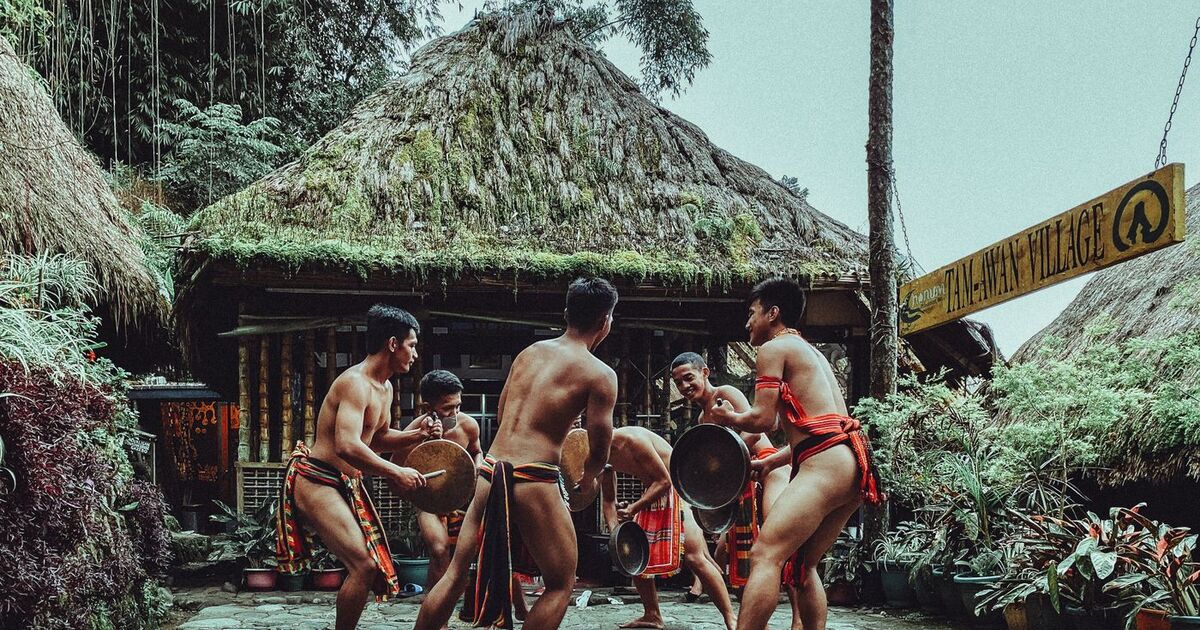
While there's no official ranking, Filipino hospitality is deeply rooted in a culture with a very low Individualism score of 32. This collectivist mindset, combined with concepts of social honor and obligation, makes welcoming others a fundamental part of the social fabric, not just a friendly gesture.
By the Numbers: Can You Even Measure Hospitality?
Let's get one thing straight: there is no global 'Hospitality Index' where countries are ranked like Olympic gymnasts. So, claiming Filipinos are 'the most' hospitable is, statistically speaking, impossible to prove. But that doesn't mean we're flying blind. We can decode the cultural programming behind the behavior using data from cultural psychologist Geert Hofstede. His groundbreaking research gives us a six-dimension model to quantify a country's cultural software. For the Philippines, the numbers are incredibly telling.
First, their Individualism (IDV) score is a rock-bottom 32. This paints a picture of a collectivist society where 'we' is always more important than 'me.' People are integrated into strong, cohesive in-groups (family, clan, neighborhood) that provide protection in exchange for unwavering loyalty. Contrast this with the USA's score of 91. Next, the Philippines scores a massive 94 in Power Distance (PDI). This signifies a culture that accepts and expects hierarchical order. People have their place, and this social structure requires no further justification. This high PDI means showing respect to elders, guests, and authority figures isn't just polite; it's a non-negotiable part of the social order. Finally, their low Long Term Orientation (LTO) score of 27 suggests a culture that values tradition and fulfilling social obligations over saving for the future. These numbers don't measure smiles per capita, but they reveal the deep-seated cultural logic that makes hospitality a powerful social necessity.
| Hofstede Dimension | Philippines Score | USA Score |
|---|---|---|
| Power Distance (PDI) | 94 (High) | 40 (Low) |
| Individualism (IDV) | 32 (Low) | 91 (High) |
| Long Term Orientation (LTO) | 27 (Low) | 26 (Low) |
Colonial Roots and Shared Identity: The History of 'Pakikipagkapwa-tao'
To understand why a Filipino family might offer you, a near-stranger, the best seat and the last piece of chicken, you need to look back way before the first tourist ever arrived. The bedrock is the indigenous Filipino concept of kapwa. Championed by the father of Filipino Psychology, Virgilio Enriquez, kapwa is not just about being nice. It's a core psychological concept of a 'shared self' or 'shared identity' with others. You see yourself in your fellow human being, so treating them well is treating a part of yourself well. This isn't just empathy; it's a recognition of a shared, interconnected identity.
Then, drop 333 years of Spanish colonization onto that foundation. The Spanish introduced a rigid, hierarchical Catholicism and a feudal social structure that reinforced the high Power Distance we see in the data. Hospitality became a way to navigate this new order. Being a gracious host or an appreciative guest was a way to show respect, maintain your family's honor, and build alliances in a society where social capital was everything. This era also entrenched two powerful concepts: hiya (a complex sense of shame or social propriety) and utang na loob (a debt of gratitude). You offer hospitality to avoid the hiya of being seen as a bad host, and the guest, in turn, incurs an utang na loob. Hospitality became a performance, a transaction, and a survival tool all at once.
The Group Comes First: The Sociology of Filipino Social Harmony
In a society with an Individualism score of just 32, the basic unit is not the individual; it's the family. And 'family' in the Philippines doesn't just mean mom, dad, and the kids. It's a sprawling, interconnected web of aunts, uncles, cousins, second-cousins, and godparents that forms the core of one's identity and social safety net. Your actions, including how you treat a guest, reflect directly on the honor of this entire group. This is where the practice of pakikisama comes in. Often translated as 'smooth interpersonal relations,' pakikisama is the cultural imperative to maintain group harmony, often at the expense of individual desires.
When a guest enters a Filipino home, they are not just an individual; they are a representative of another social unit. The act of hospitality is a public performance designed to show the host family's good standing, generosity, and adherence to social norms. Refusing food, for example, isn't just declining a snack; it can be interpreted as a rejection of the host's effort and a disruption of social harmony, causing them hiya. This is why hosts are so insistent. They are not just feeding a person; they are fulfilling a deeply ingrained social role to protect their family's reputation and maintain the delicate balance of pakikisama. It's a social drama where everyone has a part to play.
The Fine Print: What People Get Wrong About Filipino Hospitality
The biggest misconception is that Filipino hospitality is a one-way street of pure, unadulterated altruism. It's far more complex and transactional than that. The invisible engine running beneath many of these interactions is utang na loob, the 'debt of gratitude.' When you are shown exceptional hospitality, you incur a social debt that is profound and often un-repayable in a single act. This isn't a simple 'I owe you one.' It's a deep, long-term bond of obligation. This 'debt' can be called upon later, creating a system of reciprocal obligations that underpins Filipino social networks.
Furthermore, the pressure to be a good host can be an immense economic and emotional burden. Families may spend money they don't have on lavish meals for guests to avoid the hiya of appearing stingy. This 'tyranny of hospitality' means that the warm welcome you receive might be fueled by social anxiety as much as genuine affection. It's not a scam, but it's also not a fairytale. It's a deeply ingrained social contract where the price of admission is participation in a lifelong web of reciprocity. Forgetting this transactional nature is to fundamentally misunderstand the culture and see only the surface-level smile.
The Collectivist Playbook: How Filipinos Fit a Global Hospitality Pattern
While Filipino hospitality has its own unique flavor—a mix of indigenous Malay warmth and Spanish Catholic formality—it's not an anomaly. It's a classic expression of a collectivist, high-context, honor-based culture. Look at the Hofstede numbers again: high Power Distance (94) and low Individualism (32). This statistical profile is common across many of the world's so-called 'most hospitable' regions. Cultures in the Mediterranean, Latin America, and the Middle East often display similar patterns.
In these societies, group identity and reputation are paramount. Hospitality is a primary tool for managing social relationships and demonstrating honor. The guest is treated like royalty not just out of kindness, but because the host's (and by extension, their family's or tribe's) reputation is on the line. What sociologist Frank Lynch called 'Social Acceptance' in the Philippine context is a universal drive in collectivist cultures. The Philippines' particular version is shaped by its unique history, but the underlying operating system—prioritizing the 'we' over the 'I,' respecting hierarchy, and using hospitality as social currency—is a well-documented global pattern. It's less about a 'Filipino' trait and more about a 'collectivist' trait expressed in a Filipino way.
From Villages to Vlogs: Filipino Hospitality in the Digital Age
In the 21st century, these deep-seated cultural traits are being remixed, commodified, and challenged. The cultural programming for care and service has made Filipinos highly sought after as Overseas Filipino Workers (OFWs) in healthcare, domestic work, and the service industry. Their reputation for being hardworking and accommodating is both a massive economic asset—remittances from OFWs are a cornerstone of the Philippine economy—and a stereotype that can lead to exploitation. The national tourism slogan, 'It's More Fun in the Philippines,' capitalizes on this image of a friendly, welcoming populace.
At the same time, globalization and urbanization are testing the old ways. Younger generations in hyper-urban centers like Metro Manila are increasingly exposed to more individualistic global cultures through social media and the internet. The concept of pakikisama can clash with the modern desire for individual expression and authenticity. While the tradition of welcoming guests remains strong, the underlying reasons are shifting. For some, it may be less about avoiding hiya and more about curating a positive experience for an Airbnb review or a travel vlog. The cultural software is still running, but it's being updated with new apps for a globalized world. The core values persist, but their expression is becoming more complex and, in some cases, more transactional than ever.
Frequently Asked Questions
It's a combination of the indigenous value of 'kapwa' (shared self), the colonial-era need to maintain smooth interpersonal relations ('pakikisama'), and a high Power Distance culture where guests are seen as figures of authority who must be shown respect to uphold family honor.
Pakikipagkapwa-tao is the practice of treating others as fellow human beings, as an equal. It stems from the core value of 'kapwa' (shared identity) and is considered the foundation of Filipino social psychology, encouraging empathy and humane interaction.
No. While it's a strong cultural value, expression varies. Filipinos in urban areas may be more reserved than those in rural provinces. Younger generations, influenced by global culture, might also have a more individualistic approach compared to their elders.
Utang na loob, or 'debt of gratitude,' is the unspoken social contract that is often created by an act of hospitality. A host's generosity places the guest in a position of social debt, which ensures a reciprocal relationship and strengthens community bonds. It's the transactional side of the welcoming smile.
Yes, it is evolving. While the core value remains, globalization, urbanization, and social media are introducing more individualistic mindsets. For some younger Filipinos, hospitality is becoming less about strict social obligation and more about personal choice or even commercial interaction (like in tourism).