Did the Winter War Forge Finnish Sisu, Or Just Make It Famous?
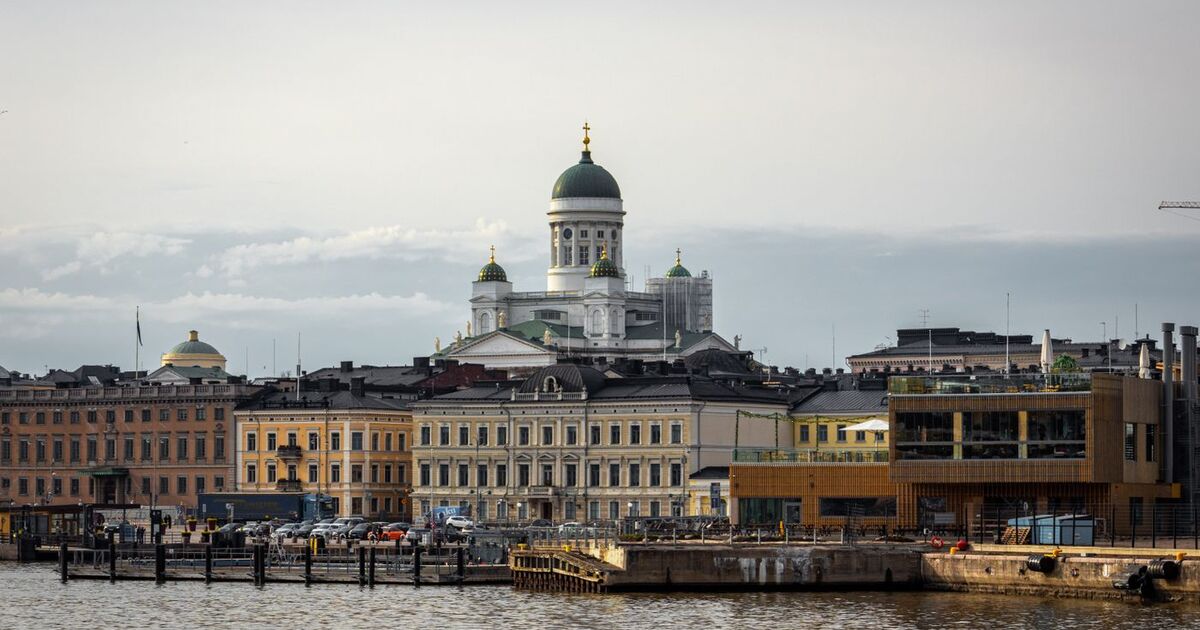
The 1939 Winter War didn't *create* Finnish sisu, but it cemented it as a national myth. Facing an invasion by over 500,000 Soviet troops, Finland's improbable resistance became the ultimate proof of its 'guts and perseverance,' transforming an old cultural concept into a global symbol of defiance.
Decoding Sisu: What the Numbers Say About Finnish Grit
Before we dive into the snow-filled trenches of 1939, let's talk numbers. What does Finnish culture actually look like on paper? The concept of 'sisu'—a unique blend of stoic determination, tenacity, and courage—seems like it should correlate with aggressive, chest-thumping masculinity. But the data tells a very different story. According to cultural researcher Geert Hofstede's framework, Finland scores a remarkably low 26 on the Masculinity dimension (Hofstede Insights, 2023). This isn't a culture driven by competition and being the 'best' in an assertive way. Instead, it's a society that values quality of life, cooperation, and modesty. Sisu, then, isn't about being the loudest warrior in the room; it's about being the last one standing, quietly.
Where the Finnish cultural DNA really shines is in its high score for Individualism (63). This points to a society where people are expected to be self-reliant and take care of themselves and their immediate family. This self-sufficiency is a core ingredient of sisu. It's the assumption that when things get tough, you look inward for strength first, not outward for a savior. Combine this with a moderate score in Uncertainty Avoidance (59), and you get a population that appreciates rules but can also improvise under pressure—a perfect mindset for facing an unpredictable invading force. The data paints a picture not of reckless warriors, but of pragmatic, self-reliant individuals who value endurance over dominance.
| Hofstede Dimension | Finland (FI) | Russia (RU) |
|---|---|---|
| Power Distance (PDI) | 33 (Low) | 93 (Very High) |
| Individualism (IDV) | 63 (High) | 39 (Low) |
| Masculinity (MAS) | 26 (Low) | 36 (Low) |
| Uncertainty Avoidance (UAI) | 59 (Moderate) | 95 (Very High) |
The Winter War's Role in Defining Finnish National Identity
Sisu existed in the Finnish lexicon long before tanks rolled across the Karelian Isthmus. But the Winter War of 1939-1940 was its global premiere. On November 30, 1939, the Soviet Union, led by Joseph Stalin, invaded Finland with over half a million men, thousands of tanks, and a formidable air force. The Finns, a nation of fewer than 4 million people, were outnumbered, outgunned, and written off by the world. The Red Army expected to be in Helsinki within weeks. They were wrong.
For 105 days, the Finnish army, under the command of Marshal Carl Gustaf Emil Mannerheim, mounted a defense that became legendary. They used their knowledge of the brutal winter landscape to their advantage. White-camouflaged ski troops appeared like ghosts out of the forests, decimating entire Soviet columns. They perfected 'Motti' tactics, a term for chopping up larger enemy forces into smaller, isolated pockets ('motti' means a bundle of firewood) and destroying them piece by piece (Trotter, 2002). They turned gasoline and tar into a weapon of defiance nicknamed the 'Molotov cocktail,' a sarcastic nod to the Soviet foreign minister who claimed their bombers were dropping bread baskets, not bombs. This was sisu in action: innovative, stubborn, and brutally effective resistance against impossible odds. The war was less a military campaign and more a national performance of sheer will.
Sisu as a Social Construct: Finland's Collective Stoicism
From a sociological perspective, the Winter War didn't invent sisu; it transformed it from a personal trait into a powerful 'foundation myth.' Every nation has these stories—the Alamo for Texans, the Dunkirk spirit for the British. They are narratives that distill a complex identity into a single, powerful idea. The Winter War became Finland's definitive story, a shared trauma and triumph that solidified what it meant to be Finnish. The war was, in the words of sociologist Émile Durkheim, a moment of 'collective effervescence'—an intense, shared experience that bonds a group and reinforces its values. In this crucible, sisu became the central value.
Sisu, therefore, functions as a social construct. It's not just an innate psychological quality; it's a behavior that is expected, performed, and socially rewarded in Finnish culture. By holding up the heroes of the Winter War—the lone sniper Simo Häyhä, the determined ski troops—Finnish society created a powerful social script. When faced with adversity, the script says you don't complain, you don't give up, you just *do*. This creates immense social cohesion. It's a story Finns tell themselves about who they are, a benchmark for resilience passed down through generations. It's less about a gene for grit and more about a cultural playbook for hardship, with the Winter War as its opening chapter.
The Biggest Misconception About Finnish Sisu and the Winter War
Here’s the part of the story that most Hollywood versions would leave out: Finland didn't win the Winter War. That’s the most common and fundamental misunderstanding of sisu. In the Moscow Peace Treaty of March 1940, Finland was forced to cede 11% of its territory, including its second-largest city, Viipuri. Hundreds of thousands of Finns became refugees in their own country. If sisu was simply about 'winning,' the Winter War would be a story of failure.
But sisu was never about winning. It's about the quality of the struggle. It's about refusing to be broken, even when you cannot win. The strategic victory was in *not being annihilated*. The Soviet Union's goal was a full-scale occupation and the installation of a puppet government, as they had done in the Baltic states. By fighting so tenaciously that the cost of total victory became too high for Stalin, Finland preserved the most important thing: its sovereignty. Sisu, therefore, is not the American concept of 'grit' geared toward achieving a goal. It's a philosophy of honorable endurance when conventional success is impossible. It is the art of losing a battle but winning the war for your own existence, a lesson written in the snows of 1940 (Engle & Paananen, 1973).
Sisu in Context: Deconstructing Finland's Warrior Culture Pattern
While sisu feels uniquely Finnish, it belongs to a broader cross-cultural pattern of 'honor cultures' or 'warrior codes' that often emerge in societies shaped by two key factors: harsh environments and a history of external threats. Think of the Japanese concept of Bushido, the Spartan ideals of ancient Greece, or the Pashtunwali code in Afghanistan. These are all cultural frameworks designed to promote resilience, honor, and martial prowess as a collective survival mechanism. They are the software a society develops to run on difficult hardware.
What makes the Finnish version distinct is its cultural flavor, again visible in the Hofstede data. Unlike the rigid, hierarchical warrior codes of, say, feudal Japan, Finnish sisu is deeply individualistic and egalitarian. The low Power Distance score (33) means that Finns are less accepting of unequal power distribution. Sisu isn't a virtue commanded by a shogun or king and obeyed by the masses. It's an individual's personal responsibility to the collective. In the Winter War, the fight was embodied by every single soldier in the forest, not just the generals in Helsinki. This combination of high Individualism (IDV 63) and low Power Distance (PDI 33) creates a unique model: a warrior culture based on a network of resilient individuals, not a rigid pyramid of power. This pattern is a direct response to a history of having to defend a long, vulnerable border against larger powers (Van Evera, 1998).
Does Sisu Still Exist in 21st-Century Finland?
So, does sisu still matter in a Finland famous for Nokia, Angry Birds, and being the world's happiest country for multiple years running? Absolutely, but it has been rebranded for the 21st century. The theater of war has been replaced by the startup incubator, the marathon course, and the quiet pragmatism of public policy. Modern sisu is the entrepreneur who pivots after a failed venture, the programmer who works through a complex problem without fanfare, or the society that collectively endures six months of darkness each year and comes out smiling.
Researchers like Emilia Lahti at Aalto University have begun studying sisu not as a historical artifact, but as a measurable psychological resource—an 'embodied fortitude' or a 'reserve of power' that individuals can tap into (Lahti, 2019). It's a key ingredient in Finland's renowned education system, which emphasizes problem-solving and resilience. It's visible in the country's swift and decisive application to join NATO in 2022, a pragmatic move echoing the strategic realism of 1940. Even Finland's 'happiness' ranking is arguably a reflection of sisu. It's not a giddy, joyful happiness, but a deep-seated satisfaction and resilience—a contentment built on the knowledge that you can handle whatever life, or your large neighbor, throws at you. The ghost of the Winter War no longer haunts Finland; instead, it serves as a quiet reminder of the strength that lies beneath the calm surface.
Frequently Asked Questions
There's no direct translation. It's a powerful mix of courage, resilience, guts, and perseverance in the face of extreme adversity. It implies going beyond your perceived limits to endure a challenge.
No, in military terms, they lost. Finland had to cede about 11% of its territory to the Soviet Union in the Moscow Peace Treaty. However, they won a huge moral and strategic victory by preserving their independence, which was the USSR's ultimate goal.
While a cultural stereotype, it has roots in values like sisu. Finnish culture often prioritizes action over words and values personal space. Hofstede's data showing high individualism (63) supports this, but it's a generalization and not true for every Finn.
American 'grit' is often about long-term passion and perseverance towards a specific, achievable goal. Sisu is more about extraordinary determination in the moment, especially when the odds seem impossible and the goal is simply to endure or survive rather than 'succeed'.
Absolutely not. Sisu is a national characteristic attributed to everyone. During the Winter War, women in organizations like Lotta Svärd played crucial roles in logistics, medical care, and communications, demonstrating immense sisu on the home front.